Strait of Hormuz reopening could pull oil back to the $70s, analyst says
U.S. stocks hit record highs after Iran reopened the Strait of Hormuz, easing fears of supply disruptions and sending oil prices sharply lower. The drop in crude boosted market sentiment as investors anticipated lower inflation and stronger consumer spending.
April 18, 2026
Christine Kiernan/Reuters
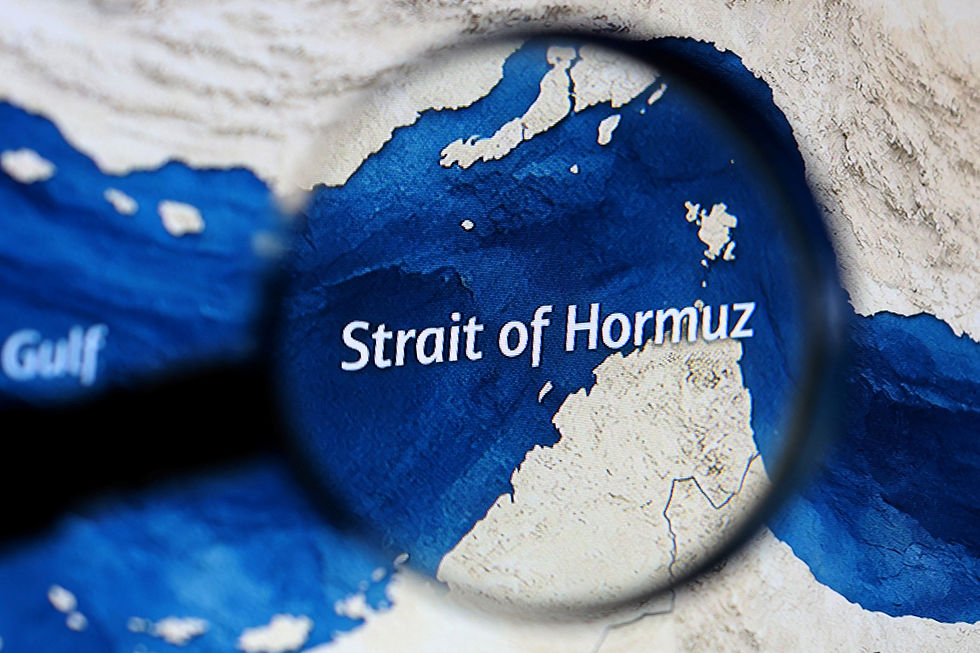
A map showing the Strait of Hormuz is seen in this illustration taken March 23, 2026.
Dado Ruvic/Illustration/Reuters
The benchmark S&P 500 and the tech-heavy Nasdaq touched all-time highs on Friday (April 17), while the blue-chip Dow hit its highest level in more than two months, as investors cheered Iran's decision to reopen the Strait of Hormuz.
Iran's Foreign Minister Abbas Araqchi said in a post on X that passage for all commercial vessels through the strait was "completely open" for the remainder of the 10-day truce between Israeli forces and Iran-backed Hezbollah agreed to in Lebanon.
That came after President Donald Trump said Washington could soon secure a peace agreement to end the war with Iran.
With markets increasingly confident the conflict may ease, oil prices slid more than 11%, easing concerns about inflation. The Strait of Hormuz is a critical chokepoint for global oil flows.
Rob Thummel, senior portfolio manager at Tortoise Capital, said the reopening could help restore supply and bring prices down from crisis levels.
“We expect the oil to start flowing, physical oil volumes that come back to the markets, and that means that the market won't be as undersupplied,” he said.
He said lower oil prices are also boosting the broader market because they could help cool inflation, support consumer spending and reduce pressure on the economy. "I think what we'll see is more of an oil price that's probably in the seventies," he said, adding that prices could still move into the $80s depending on geopolitical developments.
Falling oil prices weighed on energy stocks, with the S&P 500 energy sector down 4.8%. Exxon Mobil fell 5.7%, while Chevron dropped 4.5%.
But lower crude boosted travel-related shares. American Airlines and United Airlines both jumped more than 7%, while CarnivThe CBOE Volatility Index also hit a two-month low.al and Norwegian Cruise Line rose 8.7% and 7.5%, respectively.
-Christine Kiernan/Reuters
TOP BUSINESS STORIES

PH seeks higher-value electronics investments as exports grow

How El Niño could drive up mortgage and grocery costs

Senator Aquino asks BIR to suspend online sellers' registration badge requirement
LATEST NEWS

Portuguese police arrest 25 in clearing of Lisbon protest camp

Jordan's king orders 'iron fist' response to deadly church shooting

NCR Police intensifies bomb threat awareness campaign in Metro Manila schools
Paraluman News Publication, Inc.
desk@myparaluman.ph
Tektite Towers (East), Exchange Road
Ortigas Center. San Antonio 1600
City of Pasig, NCR, Philippines
+63284298877
EXPLORE
Editorial Standards and Code of Ethics
Privacy Policy
User Policy
COMMUNITY
Contributor and Campus Voices Terms
Advertise with Paraluman News
ACCOUNTABILITY & SAFETY
Submit a Claim for Fact-Checking
© 2026 Paraluman News Publication