Shipping firm Maersk says Middle East has pressing need for food imports
The Middle East faces a critical food import crisis as the Gulf war disrupts shipping, with Maersk and other carriers grappling with halted routes and rising costs. Countries like Saudi Arabia, Qatar, and the UAE, which rely on imports for up to 85% of their food, are seeking alternative logistics solutions amid the Strait of Hormuz closure.
March 26, 2026
Terje Solsvik/Reuters
_JPG.jpg)
Trucks ply on roads near refrigerated Maersk containers at APM Terminals at the Port of Los Angeles, California, U.S., March 4, 2026.
Mike Blake/Reuters
The Middle East region has a "pressing need" for food imports that have been disrupted by the outbreak of war in the Gulf, the chair of the board of Danish container shipping group A.P. Moller-Maersk MAERSKb.CO said on Wednesday.
According to the World Economic Forum, Gulf Cooperation Council countries - which include Saudi Arabia, Qatar and the United Arab Emirates - import up to 85% of their food.
The war that began with U.S.-Israeli strikes on Iran last month, followed by Iranian attacks across the region and its closing of the Strait of Hormuz, has brought shipping in the Gulf to a near standstill, rippling across global supply chains.
Maersk temporarily suspended cargo bookings to many ports in the Gulf region and introduced emergency bunker fuel surcharges around the world to compensate for rising fuel costs.
The company has more than 6,000 employees in the region providing essential transportation and logistic services to local customers and their communities, Maersk's Chair Robert Maersk Uggla said.
"This includes a pressing need for the import of food, often using cold chain solutions such as Maersk's reefer containers, a segment where we are the market leader in the region," he told the group's annual general meeting of shareholders.
"As the Strait of Hormuz is closed for now we try to find other ways to bring the cargo into the Gulf," he added, without elaborating.
Rival container shipping company Hapag-Lloyd earlier on Wednesday said it faces additional costs of $40 million to $50 million a week due to the Iran crisis, citing higher fuel costs, insurance premiums and storage charges for containers.
-Terje Solsvik/Reuters
TOP BUSINESS STORIES

PH seeks higher-value electronics investments as exports grow

How El Niño could drive up mortgage and grocery costs

Senator Aquino asks BIR to suspend online sellers' registration badge requirement
LATEST NEWS

Pope Leo urges end to Yemen violence, in address two weeks after surgery

Portuguese police arrest 25 in clearing of Lisbon protest camp
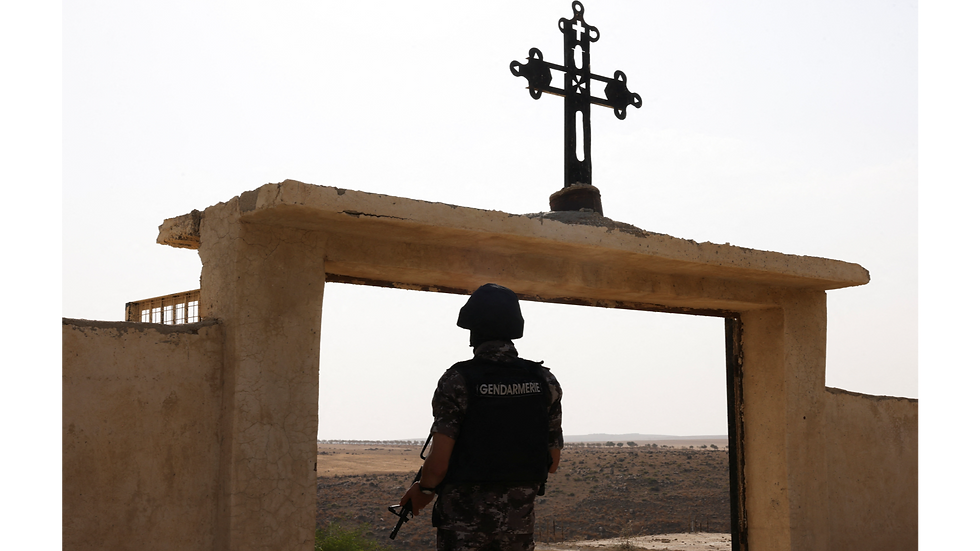
Jordan's king orders 'iron fist' response to deadly church shooting
Paraluman News Publication, Inc.
desk@myparaluman.ph
Tektite Towers (East), Exchange Road
Ortigas Center. San Antonio 1600
City of Pasig, NCR, Philippines
+63284298877
EXPLORE
Editorial Standards and Code of Ethics
Privacy Policy
User Policy
COMMUNITY
Contributor and Campus Voices Terms
Advertise with Paraluman News
ACCOUNTABILITY & SAFETY
Submit a Claim for Fact-Checking
© 2026 Paraluman News Publication