Oil prices rise as US-Israeli war with Iran continues to disrupt supply
Oil prices surged as the U.S.-Israeli conflict with Iran disrupts Middle East shipments, with Brent crude hitting $110.74 and WTI at $112.25 per barrel amid fears of prolonged supply shortages. Refiners are scrambling for alternative sources while geopolitical tensions keep the strategic Strait of Hormuz largely closed.
April 6, 2026
Katya Golubkova / Reuters

FILE PHOTO: A cargo ship in the Gulf, near the Strait of Hormuz, as seen from northern Ras al-Khaimah, near the border with Oman’s Musandam governance, amid the U.S.-Israeli conflict with Iran, in United Arab Emirates, March 11, 2026.
Stringer/File Photo/Reuters
TOKYO – Oil prices rose on Monday as fears of supply losses continue due to shipping disruptions in the Middle East, fueled by the ongoing U.S.-Israeli conflict with Iran.
Brent crude futures increased $1.71, or 1.6%, to $110.74 per barrel, while U.S. West Texas Intermediate (WTI) crude added $0.71, or 0.6%, reaching $112.25 per barrel by 12:57 a.m. GMT.
Last Thursday, the final trading day before the Good Friday holiday, WTI jumped more than 11% and Brent climbed nearly 8%, marking their largest single-day gains since 2020. The surge followed U.S. President Donald Trump’s promise to continue attacks on Iran.
The Strait of Hormuz, a critical passage for oil and petroleum from Iraq, Saudi Arabia, Qatar, Kuwait, and the United Arab Emirates, remains mostly closed due to Iranian attacks on shipping since the conflict began on February 28.
Global refiners are now looking for alternative sources, particularly for physical cargoes in the U.S. and the UK North Sea. “Global buyers are bidding aggressively for Gulf Coast barrels, and Brent is rallying even faster,” said the Schork Group in a client note.
Trump escalated tensions on Sunday, threatening in a social media post to target Iran’s power plants and bridges if the Strait of Hormuz is not reopened.
Despite the disruptions, some vessels—including an Omani-operated tanker, a French container ship, and a Japanese gas carrier—have crossed the strait since Thursday, reflecting Iran’s policy to allow passage for vessels from countries it considers friendly.
Efforts to negotiate a ceasefire appear stalled, as Iran reportedly informed mediators it is not prepared to meet with U.S. officials in Islamabad.
Meanwhile, OPEC+—which includes key members of the Organization of the Petroleum Exporting Countries and allies such as Russia—agreed to a modest increase of 206,000 barrels per day for May. However, much of this increase may be limited as several major producers cannot raise output due to the ongoing conflict.
Russian exports were recently affected by Ukrainian drone attacks on its Baltic Sea terminal, though its Ust-Luga terminal resumed loading on Saturday after temporary disruptions.
-Reporting by Katya Golubkova in Tokyo; Editing by Edmund Klamann and Christian Schmollinger/Reuters
TOP BUSINESS STORIES

PH seeks higher-value electronics investments as exports grow

How El Niño could drive up mortgage and grocery costs

Senator Aquino asks BIR to suspend online sellers' registration badge requirement
LATEST NEWS

Pope Leo urges end to Yemen violence, in address two weeks after surgery

Portuguese police arrest 25 in clearing of Lisbon protest camp
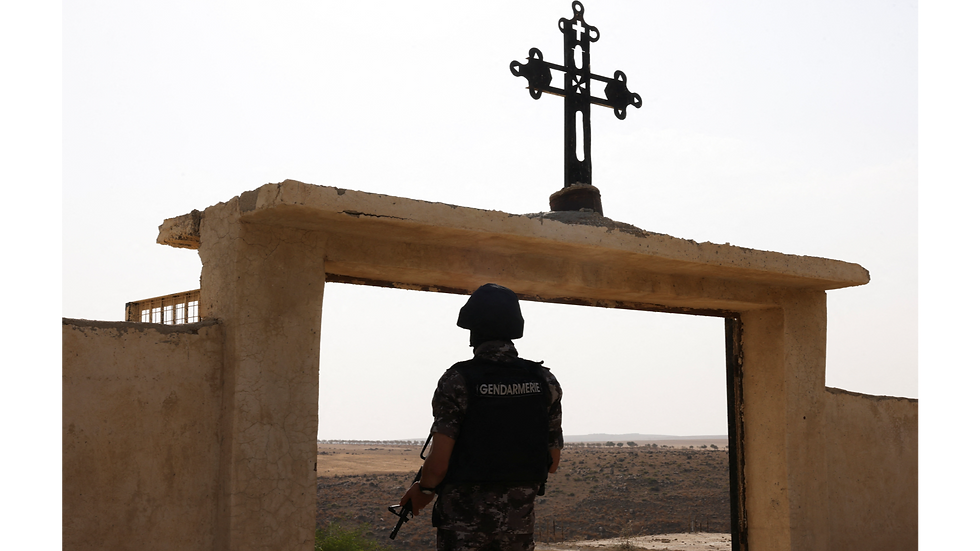
Jordan's king orders 'iron fist' response to deadly church shooting
Paraluman News Publication, Inc.
desk@myparaluman.ph
Tektite Towers (East), Exchange Road
Ortigas Center. San Antonio 1600
City of Pasig, NCR, Philippines
+63284298877
EXPLORE
Editorial Standards and Code of Ethics
Privacy Policy
User Policy
COMMUNITY
Contributor and Campus Voices Terms
Advertise with Paraluman News
ACCOUNTABILITY & SAFETY
Submit a Claim for Fact-Checking
© 2026 Paraluman News Publication