JPMorgan's Dimon says he is 'a little optimistic' on Iran conflict
JPMorgan CEO Jamie Dimon sees potential for long-term Middle East stability despite short-term risks from the Gulf conflict, highlighting shifts in regional cooperation and U.S. industrial limitations.
March 25, 2026
Mike Stone and Alexandra Alper/Reuters

FILE PHOTO: FILE PHOTO: A view of the exterior of the JP Morgan Chase & Co. corporate headquarters in New York City May 20, 2015.
Mike Segar/Reuters
JPMorgan Chase JPM.N Chief Executive Officer JPM.N Jamie Dimon said on Tuesday he was "a little optimistic" about the long-term prospects for stability in the Middle East despite the short-term risks created by the war in the Gulf.
The conflict, launched by the U.S. and Israel against Iran on February 28, has upended markets, sent oil prices soaring, fuelled global inflation fears and convulsed the post-war Western alliance.
Dimon, however, said the conflict had highlighted a shift in mentality within the region that could now create conditions for the durable resolution of long-standing tensions.
"Here's why I'm a little optimistic," he said during the Hill & Valley Forum - a politics and tech conference in Washington - pointing to what he said was a desire among Saudi Arabia, the UAE, Qatar, the U.S., and Israel for "permanent peace in the Middle East."
"It's probably riskier in the short run, because we don't know the outcome of it," he added.
WAR EXPOSES US LACK OF WARTIME CAPACITY, DIMON SAYS
U.S. President Donald Trump has faced heavy criticism from political opponents over the war, and even some U.S. officials have said Iran did not pose an imminent threat to the United States.
"Iran is a terrorist threat ... This is an actual killing agent," Dimon said, pointing to Tehran's involvement in regional proxy conflicts and support for armed militia groups.
But he said that Israel also had a part to play to ease regional tensions.
"Israel's got to do a little more, in my view, to help begin some kind of long-term Palestinian state," he said.
While he voiced cautious optimism over the region's future, Dimon said the conflict had exposed the United States' lack of industrial capacity to rapidly scale up arms production in wartime.
He said he had visited the Pentagon earlier on Tuesday and was deeply frustrated with its procurement rules, policy constraints, multi-year budget rigidities and regulatory compliance burdens.
"Of course you also know that there's going to be a lot more money spent on the military, which we really need to do," Dimon said. "We just want to be part of helping their supply chain."
-Reporting by Mike Stone and Alexandra Alper in Washington; Editing by Joe Bavier/Reuters
TOP BUSINESS STORIES

PH seeks higher-value electronics investments as exports grow

How El Niño could drive up mortgage and grocery costs

Senator Aquino asks BIR to suspend online sellers' registration badge requirement
LATEST NEWS

Pope Leo urges end to Yemen violence, in address two weeks after surgery

Portuguese police arrest 25 in clearing of Lisbon protest camp
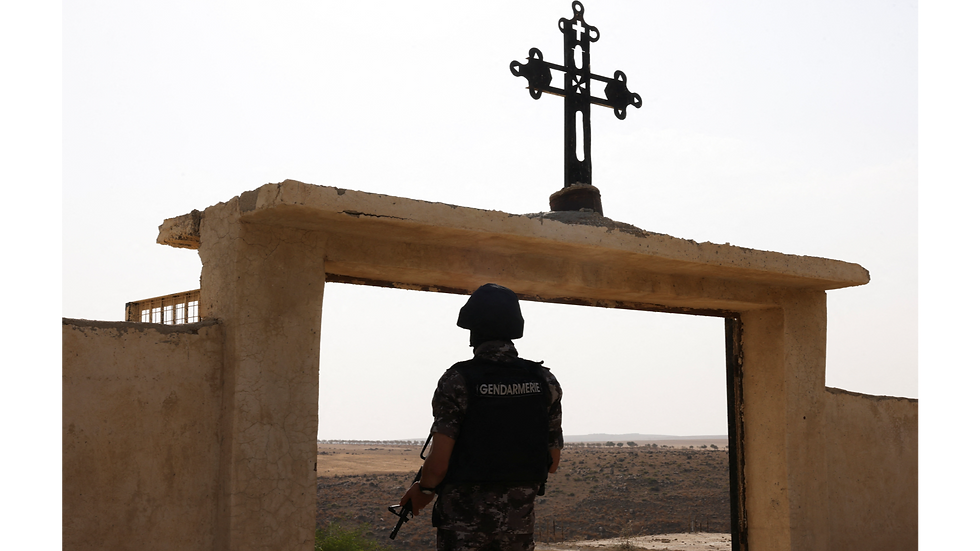
Jordan's king orders 'iron fist' response to deadly church shooting
Paraluman News Publication, Inc.
desk@myparaluman.ph
Tektite Towers (East), Exchange Road
Ortigas Center. San Antonio 1600
City of Pasig, NCR, Philippines
+63284298877
EXPLORE
Editorial Standards and Code of Ethics
Privacy Policy
User Policy
COMMUNITY
Contributor and Campus Voices Terms
Advertise with Paraluman News
ACCOUNTABILITY & SAFETY
Submit a Claim for Fact-Checking
© 2026 Paraluman News Publication