FOREX: Dollar set for best week in four months on hawkish Fed, geopolitics
The U.S. dollar is on track for its strongest weekly gain in over four months, boosted by solid jobless claims data, a hawkish Federal Reserve outlook, and geopolitical tensions with Iran. Market focus now turns to upcoming U.S. inflation and GDP reports, which could shape the next currency moves.
February 20, 2026
Rae Wee/Reuters
_JPG.jpg)
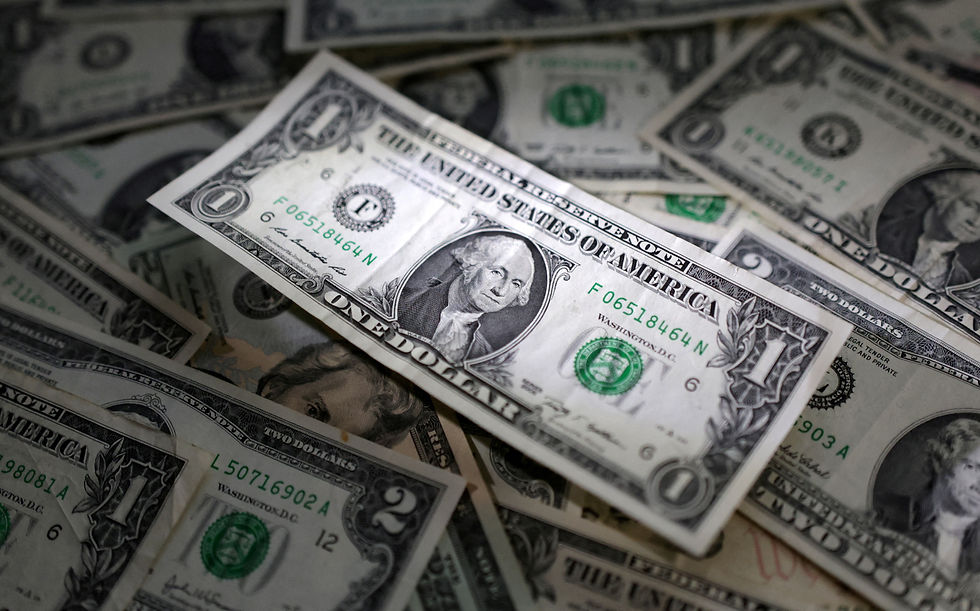
FILE PHOTO: U.S. dollar banknotes are seen in this illustration taken March 10, 2023.
Dado Ruvic/Illustration/Reuters
The dollar was poised on Friday to cap its strongest weekly performance since October, buoyed by a run of better-than-expected economic data, a more hawkish Federal Reserve outlook and as tensions between the U.S. and Iran kept markets on edge.
Overnight, the greenback got an added lift after data showed the number of Americans filing new applications for unemployment benefits fell more than expected last week, underscoring labour market stability.
It clung to gains in early Asia trade on Friday and left sterling GBP= languishing near a one-month low at $1.3457. It was headed for a weekly drop of nearly 1.5%.
The euro EUR= was similarly down a touch 0.02% at $1.1768 and set to lose 0.8% for the week, with the common currency also weighed down by uncertainty over European Central Bank President Christine Lagarde's tenure.
Against a basket of currencies, the dollar =USD hovered near Thursday's one-month peak and was last at 97.89. It was on track for a weekly gain of more than 1%, which would mark its strongest performance in more than four months.
"It wouldn't surprise me if the U.S. dollar keeps lifting for a while longer," said Joseph Capurso, a strategist at Commonwealth Bank of Australia, citing hawkishness from this week's Fed minutes which showed several policymakers were open to rate hikes if inflation proved sticky.
Concerns about a U.S.-Iran conflict have also lent the dollar some safe-haven support this week.
U.S. President Donald Trump warned Iran on Thursday it must make a deal over its nuclear program or "really bad things" will happen, and set a deadline of 10 to 15 days, drawing a threat from Tehran to retaliate against U.S. bases in the region if attacked.
"That could really affect oil markets and currency markets if things go bad there. It'll be a test also about whether or not the U.S. dollar is still a safe haven," said Capurso.
"A major attack would call that into question."
RATES, RATES, RATES
The focus for markets now turns to the release of the U.S. core PCE price index and advance fourth quarter GDP figures later in the day, which could drive the next move in currencies.
Investors continue to price in roughly two Fed rate cuts this year, though expectations for such a move in June have dipped to a roughly 58% chance from 62% a week ago, according to the CME FedWatch tool.
"The big argument within the Fed is whether or not to proactively lower rates to support the job market, or to keep rates higher for longer in order to fight inflation," said Chris Zaccarelli, chief investment officer for Northlight Asset Management, adding that Friday's PCE report will "add to the debate".
Elsewhere, the Australian dollar AUD= was down 0.08% at $0.7055 but set to lose just 0.2% for the week, as it continues to be buoyed by hawkish rate expectations at home.
The New Zealand dollar NZD= was in a bit more of a bother, headed for a 1.2% weekly loss, undone by a dovish outlook on rates from the Reserve Bank of New Zealand. Investors wagering on tighter policy were badly wrongfooted, following a blizzard of cuts over the past year or so.
The kiwi last traded 0.12% lower at $0.5967.
In Japan, the yen JPY= dipped 0.05% to 155.08 per dollar, reversing slight gains from earlier in the session after data on Friday showed the country's annual core consumer inflation hit 2.0% in January, marking the slowest pace in two years.
"Today's data won't exactly instil a sense of urgency in the (Bank of Japan) to resume its tightening cycle, especially given the lacklustre rebound in activity last quarter," said Abhijit Surya, senior APAC economist at Capital Economics.
"However, if we're right that the recent slump won't prove enduring, while wage growth picks up and underlying price pressures remain relatively firm, there is still a strong case for the bank to hike rates again in June."
-Rae Wee/Reuters
TOP BUSINESS STORIES

BIR suspends mandatory online registration seal requirement

Mixed fuel price adjustments in PH set October 27

Hong Kong embraces longer Halloween celebrations to boost festive business
LATEST NEWS

DepEd issues school safety, learning continuity protocol for strong El Niño

German mountaineer dies while climbing Nepal’s Ama Dablam

DPWH assures smooth traffic on Maharlika Highway during Undas
Paraluman News Publication, Inc.
desk@myparaluman.ph
Tektite Towers (East), Exchange Road
Ortigas Center. San Antonio 1600
City of Pasig, NCR, Philippines
+63284298877
EXPLORE
Editorial Standards and Code of Ethics
Privacy Policy
User Policy
COMMUNITY
Contributor and Campus Voices Terms
Advertise with Paraluman News
ACCOUNTABILITY & SAFETY
Submit a Claim for Fact-Checking
© 2026 Paraluman News Publication