Verification is key in US-Iran nuclear talks, Saudi foreign minister says
Saudi Arabia’s foreign minister said the key issue in upcoming U.S.-Iran nuclear talks is establishing robust verification mechanisms for Iran’s nuclear programme. He stressed that the details of monitoring uranium enrichment and nuclear material handling will determine whether a lasting and credible agreement can be reached.
Francois Murphy / Reuters
June 18, 2026

Saudi Foreign Minister Prince Faisal bin Farhan Al Saud during the 167th Meeting of the Gulf Cooperation Council Ministerial Council in Manama, Bahrain, June 10, 2026.
Saudi Press Agency/Handout via REUTERS
VIENNA — The key issue in upcoming nuclear talks between Iran and the United States is how Iran’s nuclear program will be monitored and verified, Saudi Arabia’s Foreign Minister Prince Faisal bin Farhan said on Wednesday.
Washington and Tehran have said they reached an agreement aimed at ending hostilities and opening broader negotiations on issues including Iran’s nuclear activities. A senior U.S. official presented a memorandum of understanding with Tehran, but noted that either side could still withdraw until a binding agreement is finalized.
“The details will matter,” Prince Faisal said during a conference in Vienna hosted by the European Council on Foreign Relations, a Brussels-based think tank. He declined to comment on the memorandum itself, saying he had not seen its final version.
Saudi Arabia, a close U.S. ally and regional rival of Iran, has long closely monitored Tehran’s nuclear program, which Iran insists is strictly for peaceful purposes.
Prince Faisal emphasized that verification mechanisms would be crucial, particularly beyond commitments on uranium enrichment and the handling of nuclear materials, including removal or downblending.
U.S. President Donald Trump has said he seeks to eliminate Iran’s stockpile of highly enriched uranium, which is close to weapons-grade levels. A senior Iranian official told Reuters on Sunday that Tehran had agreed in principle to dilute or downblend its stockpile.
The 2015 nuclear agreement between Iran and world powers had imposed strict limits on Iran’s nuclear program, which Tehran initially adhered to. However, the deal unraveled after the United States withdrew in 2018 under Trump, prompting Iran to gradually expand its nuclear activities beyond the agreement’s limits.
That deal also expanded the powers of the U.N. nuclear watchdog, allowing snap inspections at undeclared sites. Iran later rolled back those access provisions as the agreement collapsed.
Prince Faisal said establishing a long-term, sustainable verification system would be essential, adding that it would provide confidence not only to the international community but also to regional countries seeking greater stability and security. -Reporting by Francois Murphy; Editing by Alistair Bell/Reuters
TOP POLITICAL STORIES

Ukraine's president says up to 50,000 North Korean troops could deploy to Russia
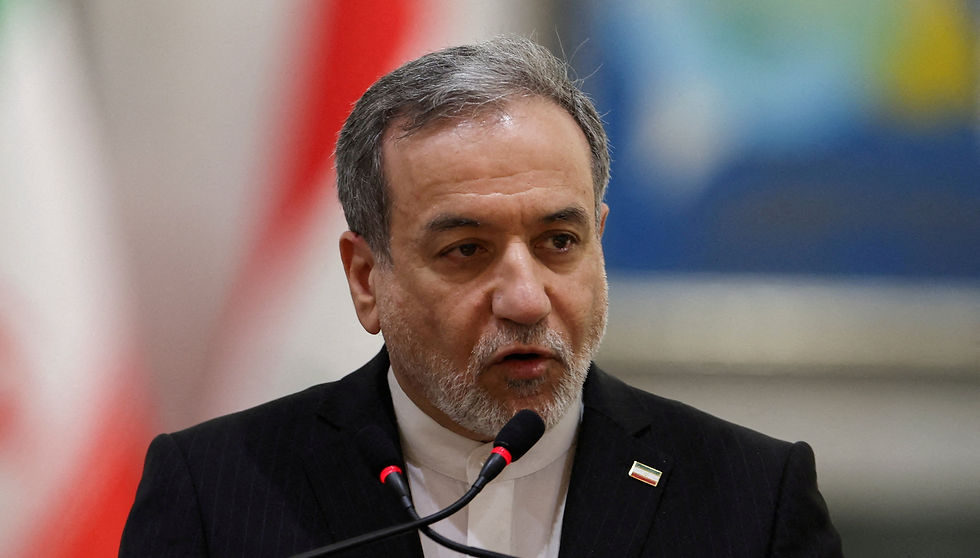
Iran says Oman deal nears final stage, urges US action to reopen Hormuz
_edited.jpg)
Pope Leo urges Russia and Ukraine to halt attacks on civilians
LATEST NEWS

Seven killed, 30 wounded in Houthi attack on Red Sea port of Mocha

Fire near Indonesia's Mount Bromo national park extinguished but new hotspots emerge

'Habagat' to bring heavy rains across Luzon and Western Visayas
Paraluman News Publication, Inc.
desk@myparaluman.ph
Tektite Towers (East), Exchange Road
Ortigas Center. San Antonio 1600
City of Pasig, NCR, Philippines
+63284298877
MENU
FOLLOW US
© 2026 Paraluman News Publication