US Senate joins House in voting to halt Iran war, rebuking Trump
The U.S. Senate narrowly passed a resolution urging President Donald Trump to halt military action against Iran, marking a rare congressional rebuke under the 1973 War Powers Act. The largely symbolic vote underscores growing bipartisan concern over the conflict and renewed debate over presidential war powers.
Patricia Zengerle / Reuters
June 24, 2026

FILE PHOTO: U.S. President Donald Trump speaks in the Oval Office as he signs the Secure America Act, at the White House in Washington, D.C., U.S., June 10, 2026.
Evan Vucci/File Photo/Reuters
WASHINGTON – The U.S. Senate backed legislation on Tuesday directing President Donald Trump to halt U.S. military action against Iran, marking a rare and pointed rebuke from an increasingly divided Congress.
The Senate voted 50-48 in favor of a war powers resolution that had already passed the House of Representatives earlier this month. The measure reflects growing concern, including among some Republicans, over the unpopular conflict that began on February 28.
It is the first time since the War Powers Resolution, commonly known as the War Powers Act of 1973, that both chambers of Congress have passed a measure directing a president to withdraw U.S. armed forces from hostilities.
While largely symbolic in effect, the vote represents a political setback for Trump, who until recently had maintained strong Republican backing in Congress.
The development also comes as the administration is expected to request tens of billions of dollars from lawmakers to fund ongoing military operations.
Republicans currently hold narrow majorities in both chambers, but several have broken with the president on select issues ahead of November’s midterm elections, which will determine control of Congress. Some GOP lawmakers have also resisted Trump’s proposed spending measures, including an $1.8 billion “antiweaponization” fund and a $70 billion package tied to immigration enforcement.
A Reuters/Ipsos poll released Tuesday found that only one in four Americans believe the war with Iran has been worth its cost, while a majority expressed doubt that any truce with Tehran would hold.
The Senate vote largely followed party lines, with four Republicans joining nearly all Democrats in support. Two Republican senators did not vote.
Under the War Powers Act, a concurrent resolution passed by both chambers does not require presidential approval. However, its legal force remains disputed. No similar measure has previously cleared both chambers, and a 1983 Supreme Court ruling suggested such actions may still require presidential approval to take effect.
The White House has argued that the War Powers Act is unconstitutional and not binding. A White House official said the Senate vote carried no legal weight, noting that hostilities were already ended under a ceasefire on April 7 and that the resolution did not reach the president for signature.
Legal experts say the issue is likely to be settled by the courts. Scott Anderson of the Brookings Institution said the executive branch would likely ignore the measure on constitutional grounds, and that it remains unclear who would have standing to challenge it.
Representative Gregory Meeks, the House sponsor of the resolution, said he considers it binding and intends to pursue all available legal avenues to enforce compliance.
Democrats argue that the Constitution gives Congress, not the president, the authority to declare war. Senator Tim Kaine said Congress must “own this responsibility,” urging support for the resolution.
The measure also passed the House with narrow bipartisan support, in a 215-208 vote, with four Republicans joining all Democrats in favor.
The four Republican senators who supported the resolution were Susan Collins of Maine, Rand Paul of Kentucky, Bill Cassidy of Louisiana, and Lisa Murkowski of Alaska. Democratic Senator John Fetterman of Pennsylvania voted against it.
Senators Mitch McConnell and David McCormick missed the vote.
Democratic lawmakers have signaled further efforts on war powers legislation, saying they intend to compel Republicans to publicly take positions on the conflict.
Under a 2015 law passed during negotiations over Iran’s nuclear program, Congress also retains the right to review and vote on any eventual peace agreement that would affect Iran’s nuclear capabilities.
Senate Majority Leader John Thune said he expects Congress to review and vote on any future agreement with Tehran. -Reporting by Patricia Zengerle; additional reporting by Richard Cowan and Trevor Hunnicutt; Editing by Sanjeev Miglani and Don Durfee/Reuters
TOP POLITICAL STORIES

Ukraine's president says up to 50,000 North Korean troops could deploy to Russia
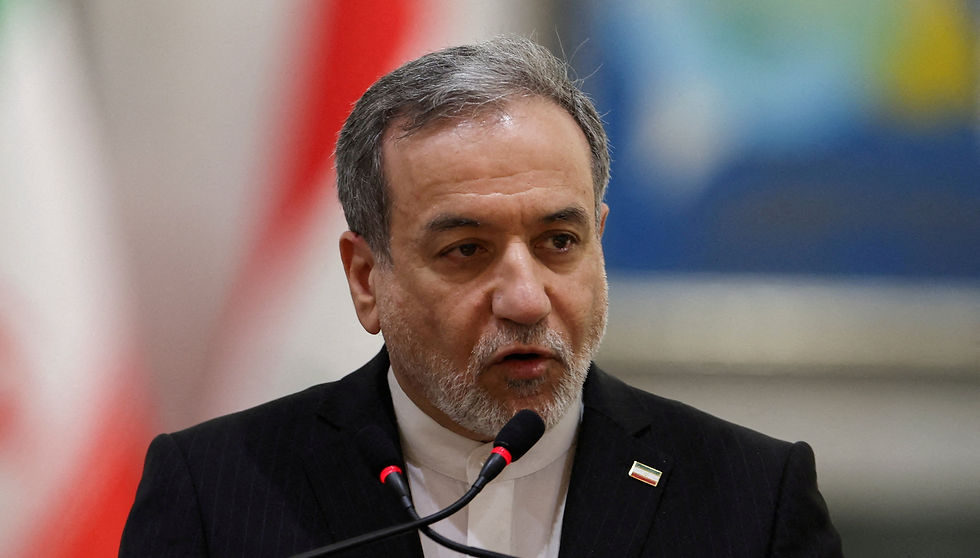
Iran says Oman deal nears final stage, urges US action to reopen Hormuz
_edited.jpg)
Pope Leo urges Russia and Ukraine to halt attacks on civilians
LATEST NEWS

Fire near Indonesia's Mount Bromo national park extinguished but new hotspots emerge

'Habagat' to bring heavy rains across Luzon and Western Visayas

Palace urges vigilance vs. leptospirosis amid prolonged rainfall and flooding
Paraluman News Publication, Inc.
desk@myparaluman.ph
Tektite Towers (East), Exchange Road
Ortigas Center. San Antonio 1600
City of Pasig, NCR, Philippines
+63284298877
MENU
FOLLOW US
© 2026 Paraluman News Publication