US, Iran talks conclude in Doha, focused on Strait of Hormuz
Iran and the United States concluded another round of indirect talks on Wednesday without clear progress toward a lasting peace agreement, instead focusing on technical issues that officials said had already been addressed in a temporary deal announced two weeks earlier.
Andrew Mills, Parisa Hafezi and Jacob Bogage / Reuters
July 2, 2026

FILE PHOTO: Drone view of oil tanker HELGA berthed at one of Iraq's southern offshore oil terminals near Basra as it prepares to load crude oil, becoming the second vessel to arrive since the closure of the Strait of Hormuz, April 24, 2026.
Mohammed Aty/File Photo/File Photo/Reuters
DOHA/DUBAI/VIRGINIA BEACH, Virginia — Iran and the United States concluded another round of indirect talks on Wednesday without clear progress toward a lasting peace agreement, instead focusing on technical issues that officials said had already been addressed in a temporary deal announced two weeks earlier.
Sources familiar with the discussions said negotiators from both countries spent two days in Doha reviewing maritime traffic in the Strait of Hormuz and the unfreezing of Iranian assets abroad — two core provisions of the initial agreement aimed at stabilizing tensions following months of conflict.
The next round of talks is expected to take place after funeral proceedings for Iran’s late Supreme Leader Ayatollah Ali Khamenei, who is scheduled to be buried on July 9, according to Qatar’s Foreign Ministry.
A spokesperson for the ministry said the Doha discussions produced “positive progress” on implementing the memorandum that halted fighting in June and were “building on the outcomes” of a previous summit in Switzerland.
In Washington, U.S. President Donald Trump said the two sides were making headway on potential limits to Iran’s nuclear program, which he described as a central issue behind the conflict. “The denuclearization of Iran is moving along well,” Trump told reporters. “They’ve had very good meetings, and we’ll see.”
However, sources said Iran’s nuclear program was not directly addressed during the Doha sessions, which were described as largely technical in nature.
U.S. Vice President JD Vance said nuclear discussions would come at a later stage. “Obviously, we’re worried about the nuclear issue, we’re going to start talking about that,” he told reporters.
American and Iranian officials held separate consultations with Qatari and Pakistani mediators, according to Qatar’s Foreign Ministry. The negotiations were conducted indirectly, with each side speaking through intermediaries rather than meeting face to face.
A source familiar with the process said U.S. envoy Steve Witkoff and presidential adviser Jared Kushner, who were expected to take part in high-level discussions, did not attend the sessions.
The head of Iran’s delegation, Deputy Foreign Minister Kazem Gharibabadi, said the talks had concluded, but neither side indicated whether any significant breakthroughs were achieved.
Attention also remains focused on the status of shipping through the Strait of Hormuz, a vital global energy corridor that handles a significant share of global oil and liquefied natural gas shipments. Before the war, the waterway accounted for roughly one-fifth of global energy trade.
Although limited maritime traffic has resumed under the interim agreement, uncertainty persists over security and governance of the strait. The agreement calls for both sides to allow shipping to resume, but recent tensions have complicated implementation, including exchanges of strikes following reported incidents involving commercial vessels.
Iran has maintained that it intends to assert greater control over the strait and has signaled plans to impose shipping tolls beginning in mid-August after a temporary exemption period expires, according to senior Iranian sources.
Trump sought to downplay the risk of renewed full-scale conflict, saying the situation had improved compared to earlier months. “I think they’ve come a long way,” he said.
Oil markets reacted to the remarks, with prices falling to a four-month low as investors reassessed supply risks tied to the conflict. Analysts also revised downward their short-term price forecasts for the first time since the war began.
Iranian state media reported that a foreign container vessel ran aground in shallow waters outside a designated shipping lane, underscoring ongoing navigation risks in the region.
Industry analysts say conditions in the strait remain unstable.
“Hormuz continues to reopen but it’s patchy, unpredictable, and not fully transparent,” said Vandana Hari, founder of oil market analysis firm Vanda Insights.
Several European countries have expressed willingness to assist in clearing naval mines from the area, though German Defense Minister Boris Pistorius said Germany is unlikely to participate, citing Iran’s lack of cooperation with international partners.
Despite ongoing diplomatic efforts, both sides remain divided on key political and security questions, leaving the path toward a comprehensive agreement uncertain. -Reporting by Reuters bureaux; Writing by Andy Sullivan and Costas Pitas; Editing by Chizu Nomiyama and Edmund Klamann/Reuters
TOP POLITICAL STORIES

Ukraine's president says up to 50,000 North Korean troops could deploy to Russia
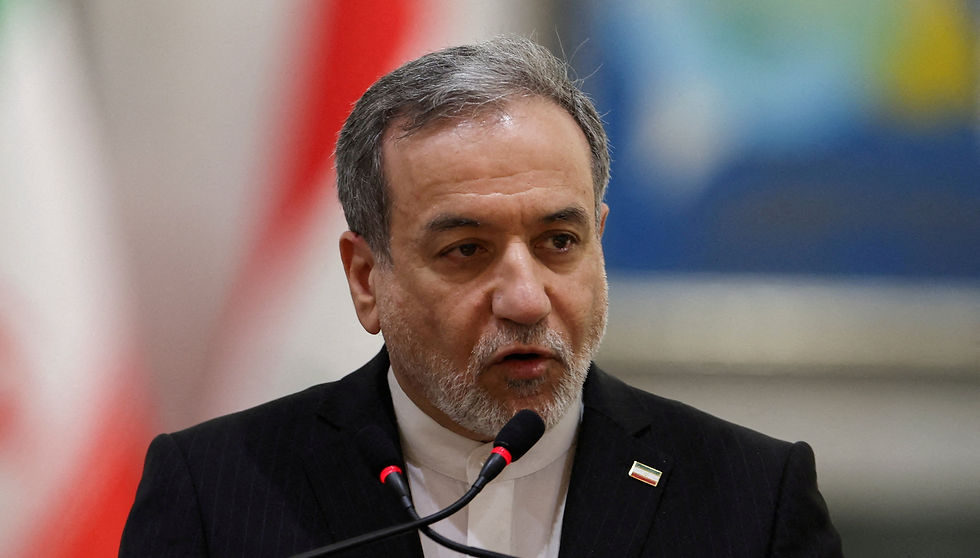
Iran says Oman deal nears final stage, urges US action to reopen Hormuz
_edited.jpg)
Pope Leo urges Russia and Ukraine to halt attacks on civilians
LATEST NEWS

Habagat, storms leave 8 dead, affect nearly 486,000 in PH

President Marcos orders heightened alert as 'habagat' brings continuous rains

Netanyahu says Israel rejects Trump's 15-point plan for Gaza
Paraluman News Publication, Inc.
desk@myparaluman.ph
Tektite Towers (East), Exchange Road
Ortigas Center. San Antonio 1600
City of Pasig, NCR, Philippines
+63284298877
MENU
FOLLOW US
© 2026 Paraluman News Publication