US, Iran at odds on nuclear inspections, frozen assets in deal to end war
U.S. President Donald Trump said Iran had agreed to long-term nuclear inspections while Tehran denied the claim, with conflicting accounts from both sides casting doubt on the durability of ongoing U.S.–Iran negotiations.
Jarrett Renshaw and Tala Ramadan / Reuters
June 24, 2026

FILE PHOTO: A 3D-printed miniature model depicting U.S. President Donald Trump, Iran flag and word "Sanctions" in this illustration created on April 17, 2025.
Dado Ruvic/Illustration//File Photo/Reuters
LOWER MACUNGIE TOWNSHIP, Pennsylvania / Dubai — U.S. President Donald Trump said on Tuesday that Iran had agreed to nuclear inspections “into infinity,” while Tehran rejected the claim, saying no such concession was made during ongoing negotiations. The conflicting statements raised new questions about the durability of a fragile peace framework between the two sides.
The United States and Iran held a first round of talks in Switzerland that concluded on Monday. However, both governments provided sharply different accounts of what had been agreed, including issues involving financial incentives for Iran, control and regulation of the Strait of Hormuz, and Israel’s parallel conflict in Lebanon. These issues form part of a broader framework agreement signed last week aimed at ending the wider regional war.
Despite the disputes, Trump said negotiations were progressing positively. “We’re getting along quite well,” he said during a rally in Pennsylvania.
The U.S. government also eased travel restrictions on Iran’s World Cup football team, allowing the squad to travel from Tijuana, Mexico, to Seattle two days before its next match, instead of the previously required one-day window.
At the same time, domestic political pressure on the U.S. administration appeared to be intensifying. Trump’s approval ratings weakened, while the Republican-controlled Senate passed a largely symbolic resolution to halt the war, highlighting divisions within the party over the ongoing conflict.
A Reuters/Ipsos poll showed that 35% of Americans believe the United States is now in a weaker position with Iran compared to before the war, while 23% said it is stronger.
The Senate vote, which passed 50–48, reflected growing unease among lawmakers regarding the conflict that began on February 28. It marked the first time both chambers of Congress had approved a resolution under the War Powers Act directing the withdrawal of U.S. forces from hostilities, though its practical impact remains unclear.
Maritime pressure and seafarer evacuation
Although a long-term peace agreement remains uncertain, the initial U.S.-Iran understanding has allowed shipping to resume through the Strait of Hormuz, a critical corridor that typically carries about one-fifth of global energy supplies.
Oil prices fell on Tuesday to their lowest levels since before the conflict began on February 28. Meanwhile, the United Nations’ maritime agency said it was coordinating efforts to evacuate around 11,000 seafarers stranded after disruptions in the waterway.
The agreement reportedly requires Iran to keep the strait open for 60 days, although Iranian officials have indicated the possibility of imposing tolls or transit fees afterward.
Oman and Iran issued a joint statement affirming their “sovereign rights” over the waterway and said they would cooperate on managing maritime traffic and related costs. Oman also said it had worked with the International Maritime Organization to establish a temporary maritime corridor for vessels transiting the strait.
U.S. Secretary of State Marco Rubio, visiting Gulf allies uneasy about the deal, said Iran would not be permitted to impose tolls in the strait as part of any final agreement.
The broader framework deal also calls for an immediate end to hostilities, including the war in Lebanon, the lifting of U.S. sanctions on Tehran, and the unfreezing of Iranian assets held abroad. It additionally outlines a proposed $300 billion reconstruction fund for Iran.
Disputes over nuclear inspections and frozen assets
The framework agreement does not impose immediate limits on Iran’s nuclear program, which is expected to be addressed during 60 days of further negotiations.
Trump claimed Iran had agreed to allow international inspectors long-term access to its nuclear facilities, including sites damaged in recent strikes.
“Iran has fully and completely agreed to highest level Nuclear inspections long into the future (Infinity!!!),” Trump said on social media.
However, Iranian officials denied that nuclear issues were discussed in detail during the talks. Tehran also rejected claims that it had agreed to re-admit inspectors from the International Atomic Energy Agency.
The two sides also remain divided over the use of frozen Iranian assets held in overseas accounts. Trump said any released funds would be restricted to purchasing food and medical supplies from the United States, while Iran’s envoy to the United Nations in Geneva, Ali Bahreini, said Tehran would determine how the funds are used.
The U.S. has already agreed to a 60-day sanctions waiver allowing Iran to resume limited oil sales and receive payments.
Regional tensions remain
Key disagreements also persist over Israel’s military actions in Lebanon. Bahreini said the agreement requires Israel to withdraw its forces, while Israel has stated it intends to maintain a security zone in southern Lebanon and continue operations to neutralize threats.
Even as diplomatic talks continued in Washington, renewed violence was reported in southern Lebanon. Lebanese authorities said Israeli gunfire killed two people on Tuesday, prompting Iran-backed Hezbollah to accuse Israel of violating a ceasefire that has largely held since Sunday.
The evolving situation underscores the fragility of the agreement, with major disagreements still unresolved despite early diplomatic progress. -Reporting by Reuters bureaus; Writing by Andy Sullivan, Lincoln Feast and Sharon Singleton; Editing by Gareth Jones and Cynthia Osterman
TOP POLITICAL STORIES

Ukraine's president says up to 50,000 North Korean troops could deploy to Russia
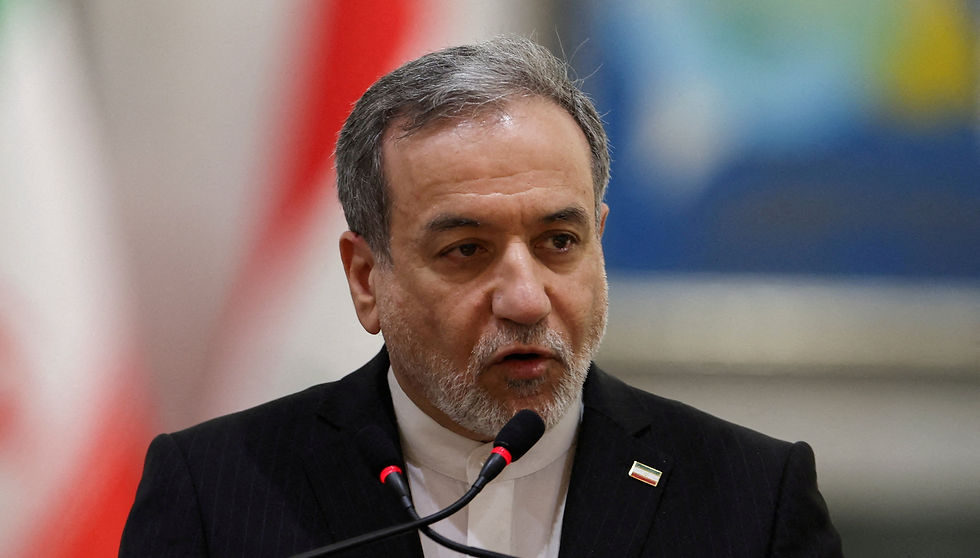
Iran says Oman deal nears final stage, urges US action to reopen Hormuz
_edited.jpg)
Pope Leo urges Russia and Ukraine to halt attacks on civilians
LATEST NEWS

Fire near Indonesia's Mount Bromo national park extinguished but new hotspots emerge

'Habagat' to bring heavy rains across Luzon and Western Visayas

Palace urges vigilance vs. leptospirosis amid prolonged rainfall and flooding
Paraluman News Publication, Inc.
desk@myparaluman.ph
Tektite Towers (East), Exchange Road
Ortigas Center. San Antonio 1600
City of Pasig, NCR, Philippines
+63284298877
MENU
FOLLOW US
© 2026 Paraluman News Publication