G7, other allies discuss ways to reduce dependence on Chinese rare earths
G7 and major economy finance ministers met in Washington to explore ways to reduce reliance on China for rare earths, including new partnerships, price floors, and supply chain diversification. The discussions focused on securing critical minerals essential for technology, defense, and renewable energy while promoting ethical sourcing and EU-led initiatives.
Maria Martinez Reuters
Kanishka Singh Reuters
January 13, 2026

FILE PHOTO: U.S. Treasury Secretary Scott Bessent looks on at the White House in Washington, D.C., U.S., December 13, 2025.
Aaron Schwartz/Reuters
Finance ministers from the G7 and other major economies met in Washington on Monday to discuss ways to reduce dependence on rare earths from China, including setting a price floor and new partnerships to build up alternative supplies, ministers said.
The meeting, convened by U.S. Treasury Secretary Scott Bessent, included finance ministers from G7 members Japan, Britain, France, Germany, Italy, Canada and the U.S. as well as officials from Australia, Mexico, South Korea and India.
U.S. Trade Representative Jamieson Greer and representatives from the U.S. Export-Import Bank and JP Morgan also attended, but no joint statement was issued by the meeting's participants.
The Treasury said in a statement that Bessent sought "to discuss solutions to secure and diversify supply chains for critical minerals, especially rare earth elements," and expressed optimism that countries would pursue "prudent de-risking over decoupling" from China.
A U.S. official said on Sunday that Bessent was going to urge participants to step up efforts to reduce reliance on critical minerals from China, which has imposed strict export controls on rare earths, most recently on supplies to Japan.
Japanese Finance Minister Satsuki Katayama told reporters on Monday evening that there was "broad agreement on the need to swiftly reduce reliance on China for rare earths."
She said she outlined short-, medium- and long-term policy approaches for G7 and like-minded countries to bolster non-Chinese rare earth supplies.
"These include creating markets based on standards such as respect for labor conditions and human rights, as well as deploying a range of policy tools - support from public financial institutions, tax and financial incentives, trade and tariff measures, quarantine measures and minimum price setting," Katayama said. "I stressed the importance of committing to these measures."
A spokesperson for China's embassy in Washington could not be immediately reached for comment.
'WE HAVE TO BECOME ACTIVE'
The gathering's participating countries and the EU account for 60% of global demand for critical minerals. But China dominates the supply chain, refining between 47% and 87% of copper, lithium, cobalt, graphite and rare earths, according to the International Energy Agency.
The minerals are essential for defense technologies, semiconductors, renewable energy components, batteries and refining processes.
Last week, China banned exports of items destined for Japan's military that have civilian and military uses, including some critical minerals.
German Finance Minister Lars Klingbeil said discussions at the meeting included a potential rare-earths price floor and partnerships to boost supplies, but noted the talks had just begun with many unresolved issues.
He said rare earths and critical mineral supplies would be a central topic under the French presidency of the Group of Seven advanced economies this year.
However, he warned against an anti-China coalition, stressing that Europe needs to move faster on its own to develop supplies of important raw materials.
"What is very important to me is that we in Europe do not sit back," Klingbeil said. "Neither complaining nor self-pity helps us, we have to become active."
He added that the EU needed more financing at the bloc level, pointing to a new German raw materials fund.
The EU must also move forward urgently on recycling, Klingbeil said, citing its "big potential" for reducing dependencies and broadening supply.
-Maria Martinez and Kanishka Singh/Reuters
TOP POLITICAL STORIES

Trump sets 2026 deadline to end US military aid to Israel

Iran-US deal remains elusive despite diplomatic efforts, Iranian official says
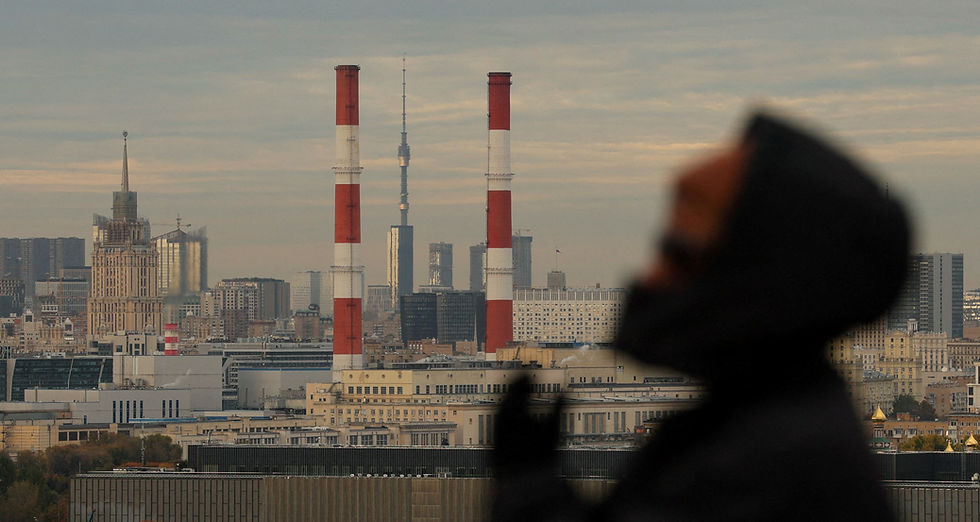
Russia claims strike on Ukrainian power facilities in massive overnight attack
LATEST NEWS

Businessman killed, 2 suspects arrested over Marawi land dispute shooting

Brazil urges action on climate goals as COP30 wraps up

UK court clears MI5 of contempt proceedings over misleading evidence
Paraluman News Publication, Inc.
desk@myparaluman.ph
Tektite Towers (East), Exchange Road
Ortigas Center. San Antonio 1600
City of Pasig, NCR, Philippines
+63284298877
EXPLORE
Editorial Standards and Code of Ethics
Privacy Policy
User Policy
COMMUNITY
Contributor and Campus Voices Terms
Advertise with Paraluman News
ACCOUNTABILITY & SAFETY
Submit a Claim for Fact-Checking
© 2026 Paraluman News Publication