FACTBOX: Top cases on the US Supreme Court's docket
The U.S. Supreme Court is poised to issue landmark rulings on a wide range of issues, including voting rights, immigration, presidential powers, gun laws, transgender athletes, and campaign finance. The decisions, expected by the end of June, could significantly shape American law, politics, and civil liberties for years to come.
REUTERS
June 12, 2026

A photo of the U.S. Supreme Court building with an American flag, courtesy of Wix.
Tim Mossholder/Unsplash via Wix
The U.S. Supreme Court is nearing the end of its current term, with decisions expected on several major cases that could shape American law and policy for years to come. The cases involve a wide range of issues, including voting rights, presidential authority, immigration, campaign finance, gun laws, transgender athletes, and federal agency powers.
Among the most significant rulings already issued, the court weakened a key provision of the Voting Rights Act, making it more difficult for minority groups to challenge electoral maps they consider racially discriminatory. The decision is expected to have a major impact on congressional redistricting ahead of the November midterm elections.
The court is also considering a challenge to President Donald Trump’s executive order restricting birthright citizenship. During oral arguments, several justices questioned the legality of the directive, which would deny automatic citizenship to certain children born in the United States. A final ruling is expected before the end of June.
Another major case concerns Trump’s use of emergency powers to impose broad tariffs on imports. In a 6-3 decision, the court ruled that the president exceeded his authority under the International Emergency Economic Powers Act, reaffirming that Congress holds constitutional authority over taxes and tariffs.
The justices are also reviewing cases involving presidential power over independent federal agencies. One dispute centers on Trump’s attempt to remove Federal Reserve Governor Lisa Cook, while another examines the firing of Federal Trade Commission member Rebecca Slaughter. Both cases could significantly affect the independence of federal agencies and the scope of presidential authority.
Immigration remains a prominent issue before the court. The justices heard arguments over the Trump administration’s effort to end Temporary Protected Status for hundreds of thousands of immigrants from Haiti and Syria. The court also reviewed the administration’s authority to limit asylum processing at the U.S.-Mexico border during periods of high migrant arrivals.
Several cases involve constitutional rights. The court appears poised to uphold state laws restricting transgender athletes from competing on female sports teams. The justices have also signaled skepticism toward a Hawaii law that limits carrying handguns on private property open to the public, potentially expanding gun rights under the Second Amendment.
In another notable decision, the court struck down a Colorado law that prohibited licensed counselors from engaging in “conversion therapy” conversations aimed at changing an LGBT minor’s sexual orientation or gender identity. The majority ruled that the law violated First Amendment free speech protections.
Campaign finance is also under review. The justices are considering whether federal limits on political party spending coordinated with candidates violate constitutional protections for free speech. A ruling could reshape campaign spending rules nationwide.
Election-related disputes include a challenge to a Mississippi law allowing certain mail-in ballots to be counted if they arrive after Election Day but are postmarked on time. The outcome could influence voting procedures across the country.
The court has also heard cases involving the Securities and Exchange Commission’s authority to recover illegal profits, the Federal Communications Commission’s power to issue fines, and the use of geofence warrants that rely on cellphone location data to identify potential criminal suspects.
Corporate and business-related cases have included disputes over Bayer’s Roundup weedkiller litigation, Cisco Systems’ role in alleged human rights abuses in China, music copyright claims against internet provider Cox Communications, and patent protections involving generic drugmakers.
In criminal justice matters, the court spared an Alabama death row inmate from execution after upholding a finding that he is intellectually disabled. The justices also ruled in favor of a Mississippi death row inmate who alleged racial discrimination in jury selection and limited the ability of federal judges to reduce certain prison sentences under recent criminal justice reforms.
Additional rulings addressed securities litigation involving major investment funds, copyright liability for internet service providers, and pharmaceutical patent disputes involving generic medications.
With many of the term’s most closely watched cases still awaiting decisions, the Supreme Court’s final rulings before the end of June are expected to have far-reaching consequences for voting rights, immigration policy, executive power, civil liberties, and the American legal system as a whole. -Reporting by John Kruzel, Andrew Chung, Blake Brittain, Jan Wolfe, Diana Novak Jones and Nate Raymond; Editing by Will Dunham/Reuters
TOP POLITICAL STORIES

Ukraine's president says up to 50,000 North Korean troops could deploy to Russia
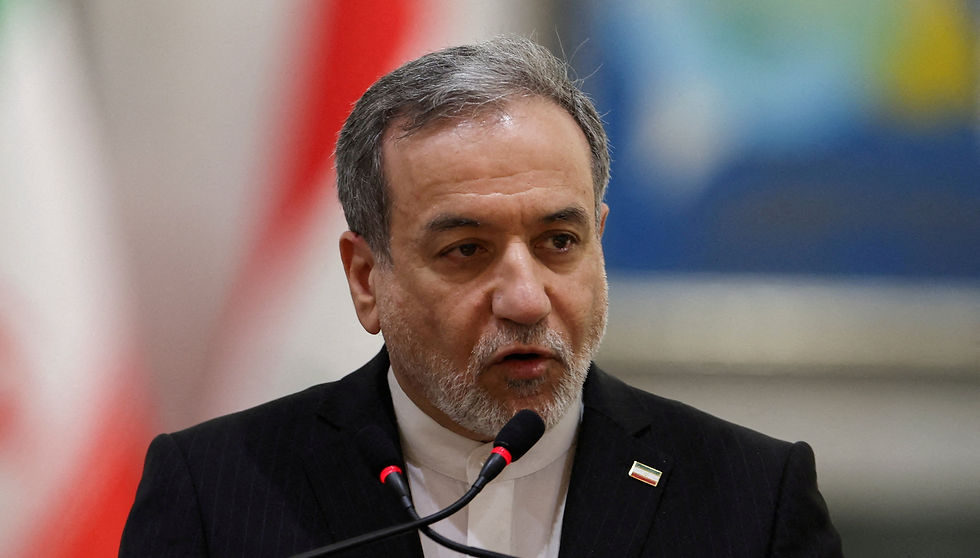
Iran says Oman deal nears final stage, urges US action to reopen Hormuz
_edited.jpg)
Pope Leo urges Russia and Ukraine to halt attacks on civilians
LATEST NEWS

OCD verifying 12 deaths linked to Luis, Maymay and 'Habagat'

52 PH schools being used as evacuation centers amid heavy rains – DepEd

Eight dead, over 230,000 affected by adverse weather in PH — OCD
Paraluman News Publication, Inc.
desk@myparaluman.ph
Tektite Towers (East), Exchange Road
Ortigas Center. San Antonio 1600
City of Pasig, NCR, Philippines
+63284298877
MENU
FOLLOW US
© 2026 Paraluman News Publication