Saudi Arabia: Iranian drone, missile attacks cut oil output and East-West Pipeline flow
Attacks on Saudi energy infrastructure have cut oil production capacity by about 600,000 barrels per day and reduced East-West Pipeline throughput by roughly 700,000 bpd, according to state media. The disruptions across key oil, refining, and export facilities have heightened supply concerns and contributed to rising crude prices amid ongoing regional tensions.
April 10, 2026
Enas Alashray, Yomna Ehab and Sheila Dang/Reuters

FILE PHOTO: A man pumps gas at an Exxon station as the price of oil and gas has surged amid the U.S.-Israeli conflict with Iran, in Washington, D.C., U.S., March 5, 2026.
Ken Cedeno/Reuters
Attacks on Saudi energy facilities have cut the kingdom's oil production capacity by around 600,000 barrels per day and throughput on its East-West Pipeline by about 700,000 bpd, Saudi state news agency SPA reported on Thursday, citing an official source at the Ministry of Energy.
The ministry source did not specify who launched the attacks, but Saudi Arabia has intercepted many Iranian missiles and drones in recent weeks. The latest attacks, including previous strikes on some facilities, also disrupted operations at key oil, gas, refining, petrochemical and electricity sites in Riyadh, the Eastern Province and Yanbu Industrial City, SPA said.
Saudi Arabia had not previously provided details about the impact to oilfield production, refineries and pipeline flow from attacks occurring during the U.S.-Israeli war on Iran, which began in late February.
Benchmark Brent crude futures rose in post-settlement trade on Thursday after settling up $1.17 or 1.2%, at $95.92 a barrel.
"The East-West pipe is diverting so much of the Saudi crude not able to leave via the Strait of Hormuz," said Kpler analyst Matt Smith. "Any pullback on volume is going to add to the tight situation. It is not great news for markets."
The two-week ceasefire announced this week appeared tenuous at best, with Israel continuing its attacks on Lebanon and Iran showing few signs that it was lifting its near-total blockade of the Strait of Hormuz, conduit for nearly a fifth of global energy supplies.
With the strait blocked, the East-West Pipeline has been Saudi Arabia's only crude export route. Reuters reported on Wednesday that Iran attacked the pipeline just hours after the ceasefire was agreed upon.
SAUDI NATIONAL KILLED IN ATTACKS
One Saudi national from industrial security staff of the Saudi energy company was killed and seven other Saudi employees were wounded in the attacks, SPA said.
Saudi Arabia has come under attack from hundreds of Iranian missiles and drones since the start of the war, most of which were intercepted, authorities have said.
Tehran has launched strikes on Israel and Gulf Arab states that host U.S. military installations.
One pumping station on the East-West Pipeline was hit, reducing throughput by about 700,000 bpd, the ministry source said. The source described the pipeline as currently a main route for supplying global markets.
The Manifa oilfield was also hit, reducing production capacity by around 300,000 bpd, while a previous attack on the Khurais facility cut a further 300,000 bpd, bringing the total reduction in Saudi production capacity to about 600,000 bpd, the source added.
It was unclear how long the Manifa and Khurais production could be offline, Smith said.
DAMAGE TO MAJOR REFINERIES
The attacks also hit major refining facilities, including SATORP in Jubail, the Ras Tanura refinery, the SAMREF refinery in Yanbu and the Riyadh refinery, directly affecting exports of refined products to global markets, SPA said. Processing facilities in Ju'aymah were also hit by fires, affecting exports of liquefied petroleum gas and natural gas liquids.
French oil major TotalEnergies TTEF.PA holds an interest in SATORP, and U.S. major Exxon Mobil XOM.M has a stake in SAMREF. TotalEnergies did not immediately respond to request for comment and Exxon referred to the operator for comment.
The strikes on key oilfields, pipeline infrastructure and refining hubs underscore the risks to global energy supplies as conflict spreads across the region. Saudi Arabia, the world's top oil exporter, plays a central role in global crude markets, and a prolonged disruption to its production, refining system or export routes could tighten supplies and add to price volatility.
The ministry source said continued attacks would reduce supply and slow recovery, affecting energy security for consuming countries and adding to volatility in oil markets. SPA said the disruption had already depleted a significant portion of operational and emergency inventories, limiting the ability to offset supply shortfalls.
-Enas Alashray, Yomna Ehab and Sheila Dang/Reuters
TOP BUSINESS STORIES

PH seeks higher-value electronics investments as exports grow

How El Niño could drive up mortgage and grocery costs

Senator Aquino asks BIR to suspend online sellers' registration badge requirement
LATEST NEWS

Pope Leo urges end to Yemen violence, in address two weeks after surgery

Portuguese police arrest 25 in clearing of Lisbon protest camp
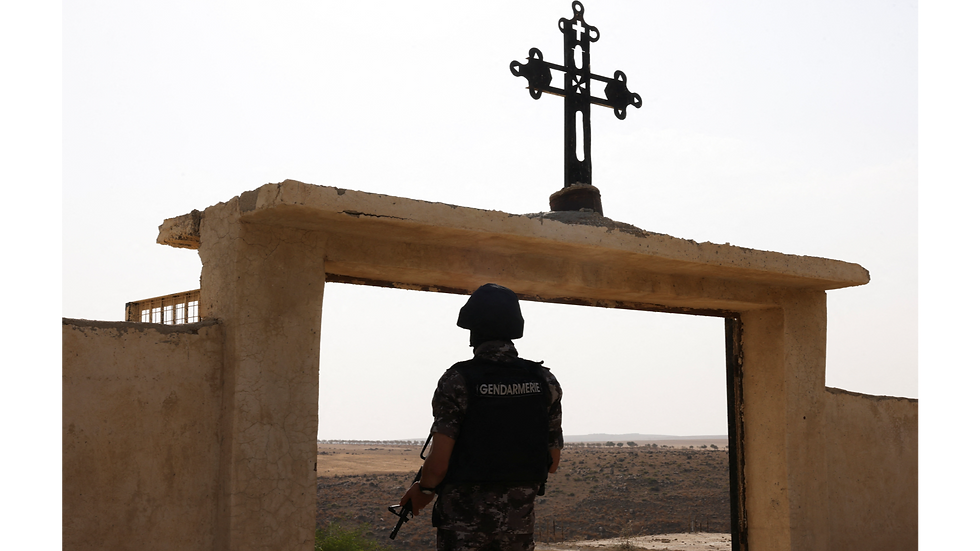
Jordan's king orders 'iron fist' response to deadly church shooting
Paraluman News Publication, Inc.
desk@myparaluman.ph
Tektite Towers (East), Exchange Road
Ortigas Center. San Antonio 1600
City of Pasig, NCR, Philippines
+63284298877
EXPLORE
Editorial Standards and Code of Ethics
Privacy Policy
User Policy
COMMUNITY
Contributor and Campus Voices Terms
Advertise with Paraluman News
ACCOUNTABILITY & SAFETY
Submit a Claim for Fact-Checking
© 2026 Paraluman News Publication