Oil tumbles below $100 after Trump announces two-week ceasefire
Oil prices tumbled below $100 per barrel as President Trump announced a two-week ceasefire with Iran, contingent on reopening the Strait of Hormuz. Brent and WTI fell sharply, easing fears of a prolonged supply disruption.
April 08, 2026
Ahmad Ghaddar and Jeslyn Lerh/Reuters

FILE PHOTO: A map showing the Strait of Hormuz, also known as Madiq Hurmuz, and 3D printed oil barrels are seen in this illustration taken March 26, 2026.
Dado Ruvic/Illustration/Reuters
Oil fell below $100 per barrel on Wednesday after U.S. President Donald Trump said he had agreed to a two-week ceasefire with Iran, subject to the immediate and safe reopening of the Strait of Hormuz.
Brent futures LCOc1 fell $15.02, or 13.8%, to $94.25 a barrel at 0805 GMT, while WTI CLc1 slid $17.43, or 15.4%, to $95.52 a barrel.
Benchmark European diesel prices LGOc1 also fell, shedding $271.50, or 17.8%, to $1,256.25 a metric ton.
Trump's turnaround came shortly before his deadline for Iran to open the Strait of Hormuz, where 20% of the world's oil transits, or face widespread attacks on its civilian infrastructure.
"This will be a double sided CEASEFIRE!" he wrote on social media, after posting earlier on Tuesday that "a whole civilization will die tonight" if his demands were not met.
Iran said it would halt its attacks if attacks against it stopped, and that safe transit through the Strait of Hormuz would be possible for two weeks in coordination with Iranian armed forces, according to a statement by Foreign Minister Abbas Araqchi.
"In theory, the 10–13 [million barrels per day] of crude oil and product supply stranded behind the Strait should now be gradually released," said Tamas Varga, analyst at brokerage PVM Oil. "Whether the pre-March status quo will be re-established depends entirely on whether the truce can be turned into a permanent peace during the negotiations in Pakistan."
Several Gulf states identified missile launches and drone attacks or issued warnings to civilians to take shelter.
"Even with a peace deal, Iran may be emboldened to threaten the Strait of Hormuz more frequently in the future, and the market will price in heightened risk to the Strait of Hormuz going forward," MST Marquee analyst Saul Kavonic said.
The U.S.-Israeli war with Iran saw the steepest monthly oil price rise in history, of more than 50%.
"There is still scope for a significant geopolitical premium being entrenched for the foreseeable future based on the details of the comprehensive agreement," said Commonwealth Bank analyst Vivek Dhar in a note.
Trump said the U.S. had received a 10-point proposal from Iran, which he called a workable basis to negotiate, and said the parties were very far along on reaching a definitive agreement for long-term peace.
"It's a good start and could pave the way to a more permanent reopening - but lots of 'ifs' still to work out," IG analyst Tony Sycamore said.
-Ahmad Ghaddar and Jeslyn Lerh/Reuters
TOP BUSINESS STORIES

PH seeks higher-value electronics investments as exports grow

How El Niño could drive up mortgage and grocery costs

Senator Aquino asks BIR to suspend online sellers' registration badge requirement
LATEST NEWS

Pope Leo urges end to Yemen violence, in address two weeks after surgery

Portuguese police arrest 25 in clearing of Lisbon protest camp
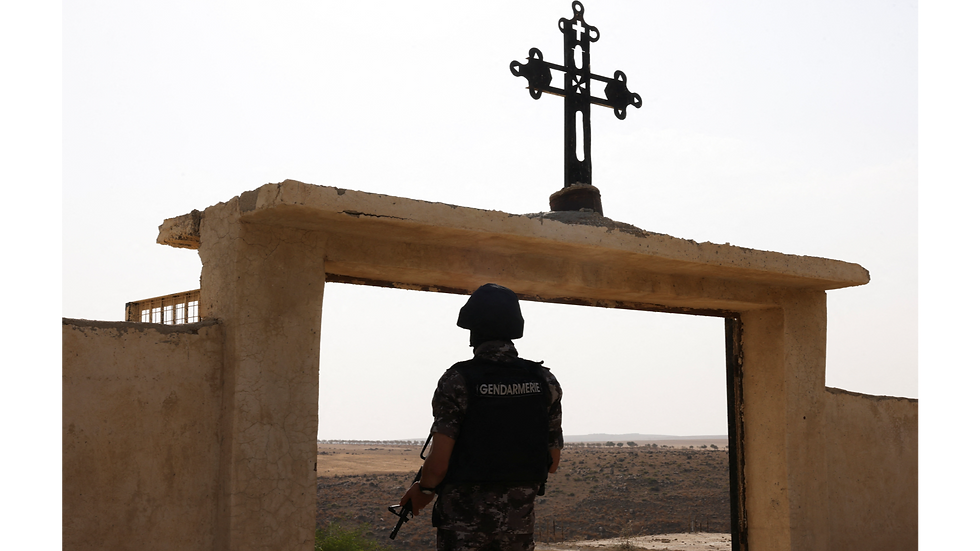
Jordan's king orders 'iron fist' response to deadly church shooting
Paraluman News Publication, Inc.
desk@myparaluman.ph
Tektite Towers (East), Exchange Road
Ortigas Center. San Antonio 1600
City of Pasig, NCR, Philippines
+63284298877
EXPLORE
Editorial Standards and Code of Ethics
Privacy Policy
User Policy
COMMUNITY
Contributor and Campus Voices Terms
Advertise with Paraluman News
ACCOUNTABILITY & SAFETY
Submit a Claim for Fact-Checking
© 2026 Paraluman News Publication