GLOBAL MARKETS: Asia stocks power towards weekly gain, oil below $100 on peace deal hopes
Asian stocks extended their strong rally while oil stayed below $100 a barrel as investors cautiously priced in hopes of a potential Middle East ceasefire and de-escalation. However, lingering uncertainty over the Strait of Hormuz and global growth risks kept markets on edge despite recent gains.
April 17, 2026
Ankur Banerjee/Reuters
_JPG.jpg)
FILE PHOTO: Iranian flag, a U.S dollar banknote and minatures of oil pipes and barrels are seen in this illustration taken June 23, 2025.
Dado Ruvic/Illustration/Reuters
Asian stocks headed for a second week of strong gains while oil prices were pinned below $100 a barrel with investors dialling back risk ahead of a crucial weekend that could pave the way for a near-term resolution to the Middle East war.
A 10-day ceasefire between Lebanon and Israel went into effect on Thursday and President Donald Trump said the next meeting between the U.S. and Iran may take place over the weekend, when their current ceasefire is due to expire.
Investors have been quick to take an optimistic view on any signs of denouement this month, even though the Strait of Hormuz - through which a fifth of the world's oil and gas supply typically flows - remains closed.
That has kept oil prices below $100 per barrel though they remain well above the pre-war levels. Brent crude futures LCOc1 dropped more than 1% to $98.14 a barrel. U.S. West Texas Intermediate crude futures CLc1 fell 1.6% to $93.15 a barrel.
In stocks, MSCI's broadest index of Asia-Pacific shares outside Japan .MIAPJ0000PUS was down 0.8% as investors locked in profits after a blistering rally this month.
The index remains close to its highest since March 2, the first trading day after the Iran war broke out, and is up 14.5% in April after dropping 13.5% last month.
Japan's Nikkei .N225 slipped 1% after hitting a record high on Thursday. Almost all stock markets are back to levels before the war erupted at the end of February.
For Andrew Chorlton, CIO for public fixed income at M&G, the last two weeks have been surprising in how quickly markets have been willing to look through the conflict and energy shock.
"There's quite a strong contrast between what policymakers and central bankers are saying about the risks that this (conflict) is creating versus what the market is implying," he said.
"That seems somewhat complacent," Chorlton added. "It seems unlikely that there shouldn't be some additional risk premium priced in, either to growth or to inflation."
The U.S. dollar benefited from safe-haven flows in March, but has since given up those gains. The euro EUR= last bought $1.1779, just below the seven-week high it touched in the previous session.
The U.S. benchmark S&P 500 .SPX and the tech-heavy Nasdaq .IXIC rose modestly to record closing highs for a second straight day on Thursday. U.S. futures EScv1 were little changed in Asian hours while European futures STXEc1 pointed to a subdued open.
"I think equity markets are remaining positive and some solid U.S. earnings have helped, but - and it's a big but - we need to see some concrete evidence that peace is going to last," said Nick Twidale, chief market strategist at ATFX Global.
"And to me, that is a full reopening of the Strait, or we could see some substantial corrections in global stocks in the coming days and weeks."
Closure of the waterway has caused the worst oil price shock in history, and spurred the International Monetary Fund to downgrade its outlook for the global economy, warning that a prolonged conflict could push the world to the brink of recession.
The dollar index =USD, which measures the greenback against a basket of currencies including the yen and the euro, was at 98.24, loitering near its lowest since March 2. The index had declined for eight straight sessions through Wednesday.
The risk-sensitive Australian dollar AUD= fetched $0.7163, drifting near the four-year high it touched on Thursday.
The yen JPY= was slightly weaker at 159.40 per dollar as investors took stock of comments from Bank of Japan Governor Kazuo Ueda, who steered clear of signalling a rate hike was on the cards this month.
The remarks will keep traders guessing on the timing of the next rate hike, with the lack of a clear signal leading markets to reduce bets of a rate increase at the BOJ's April 27-28 policy meeting.
-Ankur Banerjee/Reuters
TOP BUSINESS STORIES

PH seeks higher-value electronics investments as exports grow

How El Niño could drive up mortgage and grocery costs

Senator Aquino asks BIR to suspend online sellers' registration badge requirement
LATEST NEWS

Pope Leo urges end to Yemen violence, in address two weeks after surgery

Portuguese police arrest 25 in clearing of Lisbon protest camp
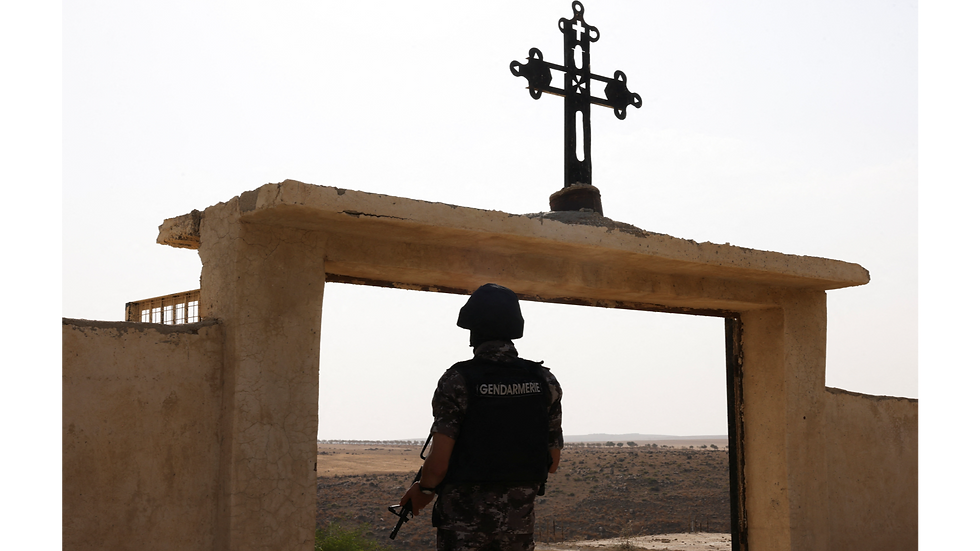
Jordan's king orders 'iron fist' response to deadly church shooting
Paraluman News Publication, Inc.
desk@myparaluman.ph
Tektite Towers (East), Exchange Road
Ortigas Center. San Antonio 1600
City of Pasig, NCR, Philippines
+63284298877
EXPLORE
Editorial Standards and Code of Ethics
Privacy Policy
User Policy
COMMUNITY
Contributor and Campus Voices Terms
Advertise with Paraluman News
ACCOUNTABILITY & SAFETY
Submit a Claim for Fact-Checking
© 2026 Paraluman News Publication