FOREX: War sets dollar for monthly rise, yen recovers on intervention threat
The U.S. dollar surged to its strongest monthly performance since July, emerging as the top safe-haven asset as escalating Middle East tensions drive oil prices higher and heighten global recession fears. Meanwhile, weaker currencies and geopolitical risks continue to fuel demand for the dollar despite easing expectations for U.S. rate hikes.
March 31, 2026
Tom Westbrook/Reuters

U.S. dollar banknotes are seen in this illustration taken March 24, 2026.
Dado Ruvic/Illustration/Reuters
The dollar headed for its biggest monthly gain since July on Tuesday and stands out as the strongest so-called safe asset as war in the Mideast has set oil prices surging and raised the risk of global recession.
Overnight the dollar extended gains widely, save for against the yen where renewed threats of intervention from Tokyo have traders wary of selling the yen too far past 160 per dollar.
Having touched its weakest since July 2024 a day earlier, the yen JPY= traded at 159.81 in the Asia morning on Tuesday, down about 2.4% on the month owing to Japan's import exposure to skyrocketing energy prices. It was little changed on data showing a small slowdown in Tokyo inflation this month.
The euro EUR= slipped 0.3% overnight, and is headed for a monthly drop of about 3%, and the Australian and New Zealand dollars slid to multi-month lows.
The Aussie AUD=, after holding up for much of the month, has notably started to crack in recent sessions as markets have shifted the focus of worries from inflation to global growth.
The currency hit a two-month low of $0.6834 overnight and traded at $0.6844 in the Asia morning. The New Zealand dollar has also crumbled and hit a four-month trough of 57 cents on Monday, and last traded nearby at around $0.5716. AUD/
South Korea's won KRW= hit its weakest since 2009.
The U.S. dollar index =USD touched its highest since last May on Monday at 100.61 and is up 2.9% through March, its sharpest monthly rise since last July.
U.S. President Donald Trump warned on Monday the U.S. would obliterate Iran's energy plants and oil wells if Tehran does not open the Strait of Hormuz, after Tehran described U.S. peace proposals as "unrealistic" and fired missiles at Israel.
Kuwait said a fully-laden Kuwaiti oil tanker was struck by an Iranian attack while anchored at Dubai, Kuwait's state news agency KUNA reported on Tuesday, pushing up oil prices.
"Barring any clear, conciliatory messages from the Iranian side, it is hard to see the dollar handing back this month's gains anytime soon," said Chris Turner, ING's global head of markets.
Federal Reserve Chair Jerome Powell talked down the likelihood of imminent rate hikes on Monday, reiterating the U.S. central bank's wait-and-see approach and saying inflation expectations seem anchored, beyond the short term.
That pulled short-dated bond yields lower and knocked out expectations for any U.S. hiking this year, but didn't really wobble the dollar because it tends to benefit from a safety bid when the outlook for global growth is negative. US/
Other havens like bonds and gold have both performed poorly since war broke out and with the yen failing to fire, threats from the Swiss National Bank to combat currency strength have turned investors off the Swiss franc as a haven. MKTS/GLOB
The dollar is up nearly 4% for the month on the franc CHF= at 0.80 francs. March inflation data is due later in the session in Europe along with Chinese PMI surveys.
-Tom Westbrook/Reuters
TOP BUSINESS STORIES

PH seeks higher-value electronics investments as exports grow

How El Niño could drive up mortgage and grocery costs

Senator Aquino asks BIR to suspend online sellers' registration badge requirement
LATEST NEWS

Pope Leo urges end to Yemen violence, in address two weeks after surgery

Portuguese police arrest 25 in clearing of Lisbon protest camp
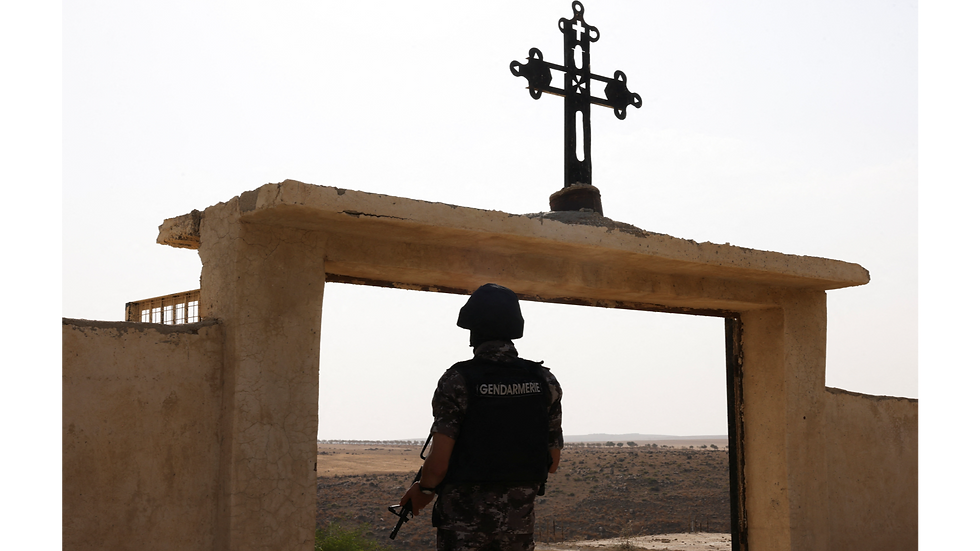
Jordan's king orders 'iron fist' response to deadly church shooting
Paraluman News Publication, Inc.
desk@myparaluman.ph
Tektite Towers (East), Exchange Road
Ortigas Center. San Antonio 1600
City of Pasig, NCR, Philippines
+63284298877
EXPLORE
Editorial Standards and Code of Ethics
Privacy Policy
User Policy
COMMUNITY
Contributor and Campus Voices Terms
Advertise with Paraluman News
ACCOUNTABILITY & SAFETY
Submit a Claim for Fact-Checking
© 2026 Paraluman News Publication