US Vice President to Israeli critics of Iran deal: Trump is your only ally
U.S. Vice President JD Vance criticized Israeli officials opposing the Iran deal, saying President Donald Trump remains Israel’s strongest ally and warning against attacks on U.S. leadership. His remarks highlighted growing tensions over the U.S.-brokered agreement, which Israel says fails to address key security concerns involving Iran and He
Nandita Bose and Doina Chiacu / Reuters
June 19, 2026

U.S. Vice President JD Vance speaks during a press briefing at the White House in Washington, D.C., U.S., June 18, 2026.
Eric Lee / Reuters
WASHINGTON — U.S. Vice President JD Vance on Thursday sharply criticized Israeli officials who have opposed the recent U.S.-brokered agreement with Iran, arguing that President Donald Trump remains Israel’s strongest international supporter amid escalating political tensions between Washington and Jerusalem.
Vance defended the deal reached this week aimed at ending hostilities with Iran, pushing back against criticism from both U.S. and Israeli figures who say the agreement does not adequately address Tehran’s missile program or fully dismantle its nuclear infrastructure. Critics also argue the accord limits Israel’s operational flexibility in its ongoing confrontation with Hezbollah in Lebanon.
The agreement comes after months of heightened regional conflict that has strained alliances and disrupted global energy markets, particularly following Iranian actions affecting key shipping routes. The diplomatic breakthrough has been met with skepticism in Israel, where officials have voiced concern that the terms fall short of long-term security guarantees.
Speaking at a White House briefing, Vance said he had not directly confirmed reports of frustration from Israeli Prime Minister Benjamin Netanyahu, but he took aim at members of Netanyahu’s cabinet who have publicly condemned the agreement and criticized the Trump administration.
“My message is twofold,” Vance told reporters. “First, Donald J. Trump is the only head of state in the world who is truly sympathetic to Israel at this moment. And second, it is unwise for Israeli officials to attack their closest and most powerful ally.”
He also emphasized the scale of U.S. military assistance to Israel, noting that a significant portion of Israel’s defensive systems has been developed with American funding and technology. The United States provides roughly $4 billion in annual military aid to Israel, with both governments currently negotiating a renewed assistance framework.
“The issue for Israel is not President Trump,” Vance said. “Anyone who believes otherwise should reconsider the strategic reality facing the country.”
The White House remarks come amid widening diplomatic friction following the Iran agreement. Israeli officials, speaking privately, have said the deal does not sufficiently address Iran’s nuclear capabilities or ballistic missile program, concerns they argue are shared across parts of Israel’s security establishment.
While attempting to ease tensions, Trump has publicly urged restraint and emphasized continued cooperation between the United States and Israel. He has also suggested that Israel could adopt a more measured approach in its military campaign against Hezbollah in Lebanon.
Netanyahu, speaking at a public event this week, reaffirmed Israel’s security posture along its northern border and indicated that Israeli forces would maintain positions in southern Lebanon if necessary to protect civilian communities.
“This requires maintaining a security buffer in southern Lebanon,” Netanyahu said, signaling no immediate change in Israel’s military stance despite the new diplomatic framework.
Israel has also released updated maps indicating an expanded military control zone in southern Lebanon, further complicating efforts to stabilize the region under the terms of the U.S.-Iran agreement.
Tensions escalated further after Israel’s far-right National Security Minister Itamar Ben-Gvir and Finance Minister Bezalel Smotrich criticized the deal, calling it detrimental to Israel’s security interests and rejecting constraints on military operations in Lebanon.
Vance, in an interview with The New York Times, questioned the strategic approach advocated by some Israeli officials, warning against what he described as overreliance on military force.
“You cannot simply eliminate every security threat through force alone,” he said, arguing that long-term stability requires broader diplomatic engagement.
Ben-Gvir responded on social media, defending Israel’s position and framing the conflict in existential terms, further highlighting divisions between segments of Israel’s leadership and Washington’s current approach.
Despite the public disagreement, Trump administration officials have expressed confidence that the agreement can hold, with Trump calling for a comprehensive ceasefire across all fronts, including Lebanon and Israel’s northern border.
As implementation of the deal begins, uncertainty remains over whether strained U.S.-Israel relations will affect coordination on security operations in the region or reshape broader Middle East strategy in the months ahead. -Reporting by Doina Chiacu in Washington, Alexander Cornwell in Jerusalem; Additional reporting by Pesha Magid and Simon Lewis; Editing by Michelle Nichols and Rod Nickel/Reuters
TOP POLITICAL STORIES

Ukraine's president says up to 50,000 North Korean troops could deploy to Russia
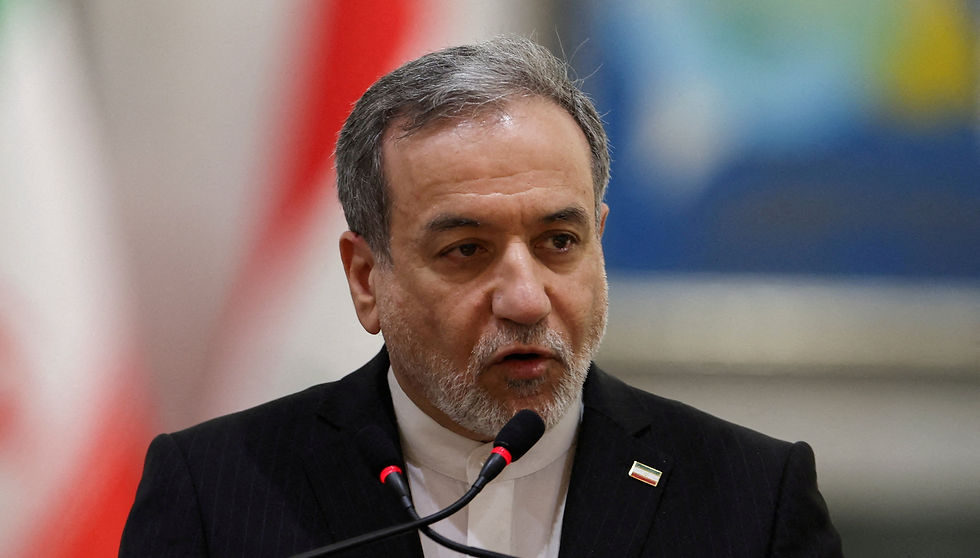
Iran says Oman deal nears final stage, urges US action to reopen Hormuz
_edited.jpg)
Pope Leo urges Russia and Ukraine to halt attacks on civilians
LATEST NEWS

Fire near Indonesia's Mount Bromo national park extinguished but new hotspots emerge

'Habagat' to bring heavy rains across Luzon and Western Visayas

Palace urges vigilance vs. leptospirosis amid prolonged rainfall and flooding
Paraluman News Publication, Inc.
desk@myparaluman.ph
Tektite Towers (East), Exchange Road
Ortigas Center. San Antonio 1600
City of Pasig, NCR, Philippines
+63284298877
MENU
FOLLOW US
© 2026 Paraluman News Publication