US judges block Trump's limits on student loan forgiveness program
Two federal judges on Tuesday blocked the Trump administration’s effort to enforce a new rule that would have stripped public service workers of eligibility for federal student loan forgiveness if their employers were deemed to have a “substantial illegal purpose.”
Nate Raymond / Reuters
July 1, 2026
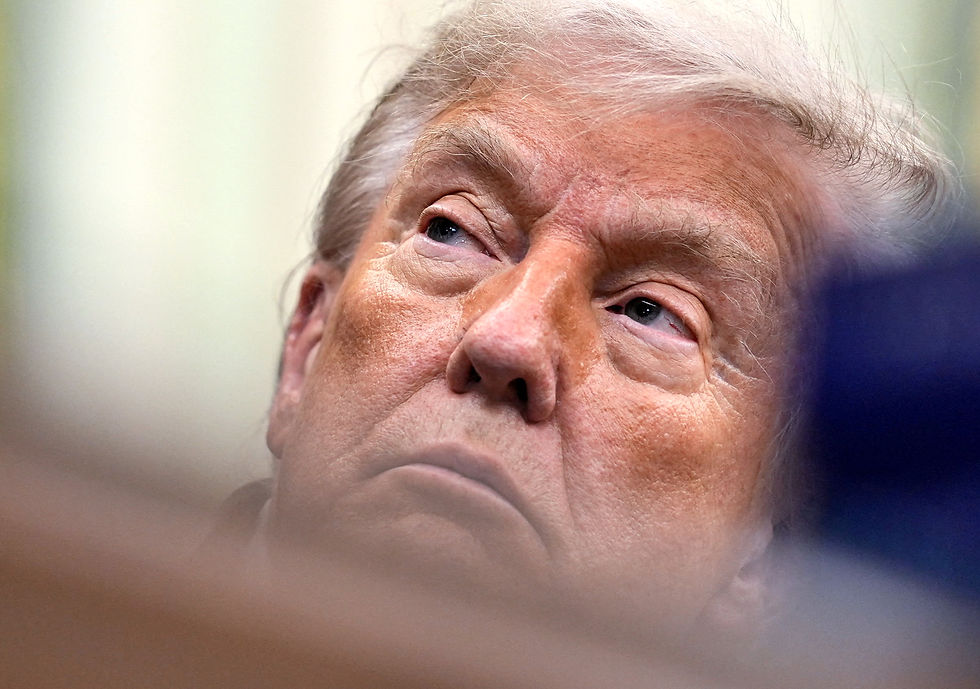
FILE PHOTO: U.S. President Donald Trump looks on as he sits in the Oval Office of the White House in Washington, D.C., U.S., June 26, 2026.
Ken Cedeno/File Photo/Reuters
BOSTON/WASHINGTON — Two federal judges on Tuesday blocked the Trump administration’s effort to enforce a new rule that would have stripped public service workers of eligibility for federal student loan forgiveness if their employers were deemed to have a “substantial illegal purpose.”
U.S. District Judge Myong Joun ruled in favor of Democratic-led states, cities and nonprofit organizations that challenged the policy, finding that the Department of Education’s rule could improperly target groups involved in immigration rights, transgender healthcare, and other advocacy work disfavored by the administration.
Shortly afterward, U.S. District Judge Amir Ali issued a separate ruling blocking the rule before it was set to take effect, following a lawsuit brought by four nonprofits engaged in immigrant rights advocacy.
The disputed policy concerned the Public Service Loan Forgiveness Program (PSLF), which allows federal student loan borrowers to have their remaining debt forgiven after 10 years of qualifying employment in government or nonprofit service. More than one million borrowers have benefited from the program since Congress created it in 2007.
President Donald Trump had directed the Department of Education to narrow eligibility, arguing the program had been misused by activist organizations that do not serve the public interest and, in some cases, undermine national security and American values.
In response, the Education Department issued a final rule that would have redefined “public service” by excluding employers engaged in what it termed a “substantial illegal purpose,” including alleged support for illegal immigration, terrorism, illegal discrimination, and gender-affirming care for minors.
In his ruling, Judge Joun said Congress designed PSLF to encourage individuals to enter public service careers despite the financial burden of higher education, and found that the department had exceeded its authority by effectively rewriting eligibility rules based on policy goals not authorized by law. He also concluded the rule likely violated First Amendment protections by discriminating against certain viewpoints.
“Indeed, the record further demonstrates that the Final Rule has already chilled protected speech,” he wrote.
The Department of Education, through Under Secretary Nicholas Kent, said it was reviewing next steps. He defended the policy as intended to ensure taxpayer support goes to organizations serving the public good, not those engaged in activities such as terrorism support or unlawful conduct.
“The Public Service Loan Forgiveness Program is intended to support Americans who serve the public good, not to subsidize organizations that engage in terrorism, facilitate illegal immigration, or support the mutilation of children,” Kent said.
New York Attorney General Letitia James, who led a coalition of 22 states and the District of Columbia in challenging the rule, said the rulings prevented the federal government from turning a public service program into a tool for political retaliation.
“Public servants should not have to pass a political loyalty test to earn the loan forgiveness they were promised,” she said.
The legal challenges argued that the rule was designed to target organizations engaged in causes the administration opposes, including immigration advocacy, diversity and inclusion initiatives, and gender-affirming healthcare.
Judge Joun agreed, saying the rule would have effectively allowed the department to revoke eligibility from borrowers working for nonprofit employers engaged in lawful advocacy and services, including assistance to immigrants and education on diversity and equity issues.
The rulings temporarily halt implementation of the policy as the lawsuits proceed, preserving current eligibility rules under the PSLF program. -Reporting by Nate Raymond in Boston; Editing by Chizu Nomiyama, Sanjeev Miglani, Stephen Coates and Cynthia Osterman/Reuters
TOP POLITICAL STORIES

Ukraine's president says up to 50,000 North Korean troops could deploy to Russia
Iran says Oman deal nears final stage, urges US action to reopen Hormuz
_edited.jpg)
Pope Leo urges Russia and Ukraine to halt attacks on civilians
LATEST NEWS

Habagat, storms leave 8 dead, affect nearly 486,000 in PH

President Marcos orders heightened alert as 'habagat' brings continuous rains

Netanyahu says Israel rejects Trump's 15-point plan for Gaza
Paraluman News Publication, Inc.
desk@myparaluman.ph
Tektite Towers (East), Exchange Road
Ortigas Center. San Antonio 1600
City of Pasig, NCR, Philippines
+63284298877
MENU
FOLLOW US
© 2026 Paraluman News Publication