US and Iran release text of interim agreement to end their war
The U.S. and Iran released a 60-day interim agreement aimed at ending their war, with President Donald Trump warning that military strikes could resume if Tehran violates the deal. The agreement includes sanctions relief for Iran, the reopening of key trade routes, and negotiations toward a permanent truce.
Steve Holland and Jihed Abidellaoui / Reuters
June 18, 2026

U.S. President Donald Trump attends a bilateral meeting with Indian Prime Minister Narendra Modi (not pictured) during the G7 Summit in Evian-les-Bains, France, June 17, 2026.
Evelyn Hockstein / Reuters
EVIAN-LES-BAINS, France / NABATIEH, Lebanon — The United States and Iran released the text of an interim agreement on Wednesday aimed at ending their ongoing war, even as tensions remained high following strong warnings from U.S. President Donald Trump that military action could resume if Iran fails to comply with the terms.
Speaking while attending the G7 Summit in France, Trump said the United States could restart strikes and target Iranian officials if commitments are violated. He also softened earlier rhetoric regarding Iran’s military capabilities, stating it would be “unfair” for Iran not to possess ballistic missiles—marking a shift from previous vows to destroy them.
“We’re going to bomb the hell out of them if they violate the agreement,” Trump told reporters. “I don’t want them to. I want them to honor the agreement.” He described Iranians as “smart people” as negotiations continued toward a possible permanent truce within the next 60 days.
Earlier in the week, Trump had issued a more forceful warning, saying: “If I don’t like it, if they don’t behave, we’ll go right back to dropping bombs right smack in the middle of their head.”
The conflict began after the United States and Israel launched military operations against Iran on February 28, which resulted in the killing of senior Iranian officials, including Supreme Leader Ali Khamenei, according to earlier reports. The war has since escalated into a broader regional crisis, contributing to rising energy prices, inflationary pressures, and concerns over global food supply disruptions.
Oil markets reacted to the agreement with initial declines, as investors anticipated a possible reopening of the Strait of Hormuz, a critical shipping route between Iran and Oman. Brent crude futures briefly fell below $80 per barrel before recovering after renewed uncertainty following Trump’s remarks about potentially resuming military action.
A senior U.S. official said the 14-point memorandum of understanding with Iran remains non-binding, meaning either side could still withdraw before a final agreement is reached. The deal extends a ceasefire first announced in April for an additional 60 days, allowing continued negotiations toward a permanent settlement.
Both Trump and Iranian President Masoud Pezeshkian reportedly signed the memorandum electronically. Iran’s foreign ministry said the agreement took effect immediately.
The document includes provisions for a full ceasefire across multiple fronts, the resumption of maritime traffic through the Strait of Hormuz, easing of sanctions, unfreezing of Iranian assets, and an economic recovery plan estimated at $300 billion. It also includes Iran’s commitment not to develop nuclear weapons, reaffirming a long-standing pledge.
Despite diplomatic progress, key issues remain unresolved. Iran’s leadership structure remains intact, its enriched uranium stockpile has not been surrendered, and its missile program has not been dismantled. Tehran also continues its support for regional allied groups, including Hezbollah in Lebanon.
G7 leaders welcomed the announcement during their summit in Evian-les-Bains, France. However, European officials reiterated concerns about Iran’s nuclear program and regional activities, emphasizing that any long-term deal must prevent Tehran from obtaining nuclear weapons.
“We underline the need for negotiations to address the threats posed by Iran in the region and beyond and ensure that they never obtain a nuclear weapon,” leaders of the United States, France, Germany, the United Kingdom, Italy, Canada, and Japan said in a joint statement.
Israeli officials were not part of the negotiations. Israeli Prime Minister Benjamin Netanyahu has previously expressed concerns over any agreement that does not fully dismantle Iran’s military capabilities.
Meanwhile, Trump also commented on Israel’s military operations in Lebanon, suggesting a more restrained approach in its actions against Hezbollah. Fighting between Israeli forces and Hezbollah has continued despite the ceasefire framework, with reports of ongoing strikes and drone attacks in southern Lebanon.
Lebanese authorities reported continued exchanges of fire, while Israeli officials confirmed injuries among their troops following drone attacks attributed to Hezbollah. The group has not publicly confirmed recent operations.
As diplomatic efforts continue, uncertainty remains over whether the interim agreement will hold or whether the conflict could escalate again if negotiations break down. -Reporting by Reuters bureausWriting by Peter Graff, Gareth Jones and Jonathan AllenEditing by Ros Russell, Aidan Lewis and Sanjeev Miglani/Reuters
TOP POLITICAL STORIES

Ukraine's president says up to 50,000 North Korean troops could deploy to Russia
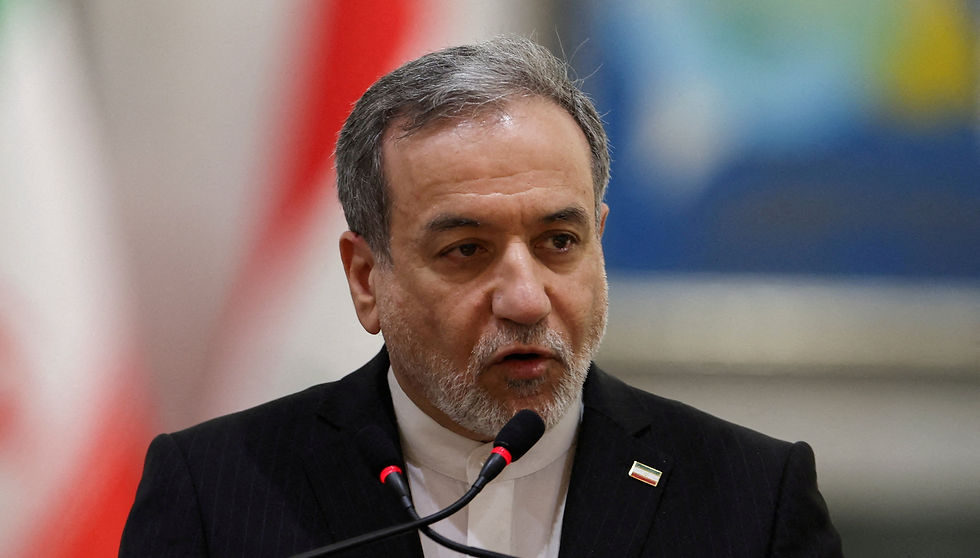
Iran says Oman deal nears final stage, urges US action to reopen Hormuz
_edited.jpg)
Pope Leo urges Russia and Ukraine to halt attacks on civilians
LATEST NEWS

Seven killed, 30 wounded in Houthi attack on Red Sea port of Mocha

Fire near Indonesia's Mount Bromo national park extinguished but new hotspots emerge

'Habagat' to bring heavy rains across Luzon and Western Visayas
Paraluman News Publication, Inc.
desk@myparaluman.ph
Tektite Towers (East), Exchange Road
Ortigas Center. San Antonio 1600
City of Pasig, NCR, Philippines
+63284298877
MENU
FOLLOW US
© 2026 Paraluman News Publication