US and Iran agree to extend ceasefire, reopen Hormuz but permanent truce yet to be negotiated
U.S. President Donald Trump announced that the U.S. and Iran have signed a preliminary agreement to extend a fragile ceasefire and reopen the Strait of Hormuz, though key details and a permanent truce remain unresolved. The deal includes potential sanctions relief for Iran but leaves major issues, including its nuclear program and regional conflicts, for further negotiation.
Steve Holland, Parisa Hafezi and Maayan Lubell / Reuters
June 16, 2026

US President Donald Trump attends a bilateral meeting with France's President Emmanuel Macron (not pictured) on the sidelines of the G7 summit, in Evian, France on June 15, 2026.
LUDOVIC MARIN/Pool via REUTERS
EVIAN-LES-BAINS, France/DUBAI/JERUSALEM — U.S. President Donald Trump said on Monday that a preliminary agreement to end the war in the Gulf has been signed by the United States and Iran, although details have not been made public and both sides said a permanent truce still needs to be negotiated.
The agreement would extend a fragile ceasefire announced in April by an additional 60 days and reopen the Strait of Hormuz, which Iran had effectively closed following U.S. and Israeli strikes in February.
Negotiators are expected to address complex issues in the next phase of talks, including the future of Iran’s nuclear program.
“The deal’s all signed,” Trump said after arriving in France for a Group of Seven summit. He added that Vice President JD Vance would attend a formal signing ceremony in Geneva on Friday.
Oil prices fell to their lowest level since March 10 following the announcement. The Strait of Hormuz, a narrow but critical waterway between Iran and Oman, carries roughly one-fifth of global oil shipments and had been disrupted during the conflict.
The agreement marks the most significant step yet toward resolving a war that has killed at least 7,000 people, mostly in Iran and Lebanon, and disrupted global energy markets. However, major elements of the deal remain unclear, including whether it goes beyond the terms of the April ceasefire.
Iranian President Masoud Pezeshkian described the U.S.-Iran memorandum of understanding on social media as an “important step” toward ending hostilities, while noting that a final, lasting agreement has yet to be reached.
Vance told CNN the document was only about one and a half pages long and “a very general document.” U.S. officials said additional details would be released in the coming days. He also said the agreement includes a “very significant sanctions relief package” for Iran.
According to U.S. and Iranian officials, the deal could eventually provide substantial economic relief to Tehran through the lifting of sanctions, unfreezing of foreign assets, and the creation of a $300 billion reconstruction fund financed by Gulf states that host U.S. military bases.
U.S. officials, speaking on condition of anonymity, said Iran would be required to meet key conditions, including a commitment never to develop nuclear weapons and to end support for militant groups such as Hezbollah in Lebanon, in order to receive those benefits.
Iran previously agreed to limit its nuclear program under a 2015 deal with the United States and other world powers. Trump withdrew the U.S. from that agreement during his first term, criticizing it for providing Iran access to billions of dollars in frozen assets.
Despite the new agreement, key disputes remain unresolved, including Iran’s stockpile of enriched uranium, which Trump has said must be destroyed or removed.
Iranian officials, who deny seeking nuclear weapons, say the agreement primarily restores diplomatic talks that were interrupted in February after the outbreak of hostilities.
While the deal reopens the Strait of Hormuz, shipping analysts say traffic is unlikely to fully resume until safety conditions are assured. Iran has suggested it may continue to manage the waterway jointly with Oman. The U.S. said the strait would remain open toll-free for 60 days and expects that principle to be included in a final agreement.
In Lebanon, fighting between Israel and the Iran-backed Hezbollah militia remains a major sticking point. Iran has said a full cessation of hostilities is part of the agreement, but Israeli Prime Minister Benjamin Netanyahu said Israel will maintain its military presence in southern Lebanon and retain the right to respond to attacks.
“Iran wanted us to withdraw, but I stood firm,” Netanyahu said, adding that he and Trump have had differences over the conflict. Israel has not taken part directly in the negotiations with Iran.
A U.S. official said Israeli withdrawal from Lebanon is not part of the agreement, a position that has been disputed in earlier phases of talks. Security sources said fighting in Lebanon eased after the announcement but has not fully stopped.
Lebanese state media reported that an Israeli drone strike killed a driver in the southern town of Kfar Tebnit. Netanyahu said Israeli forces had killed four militants.
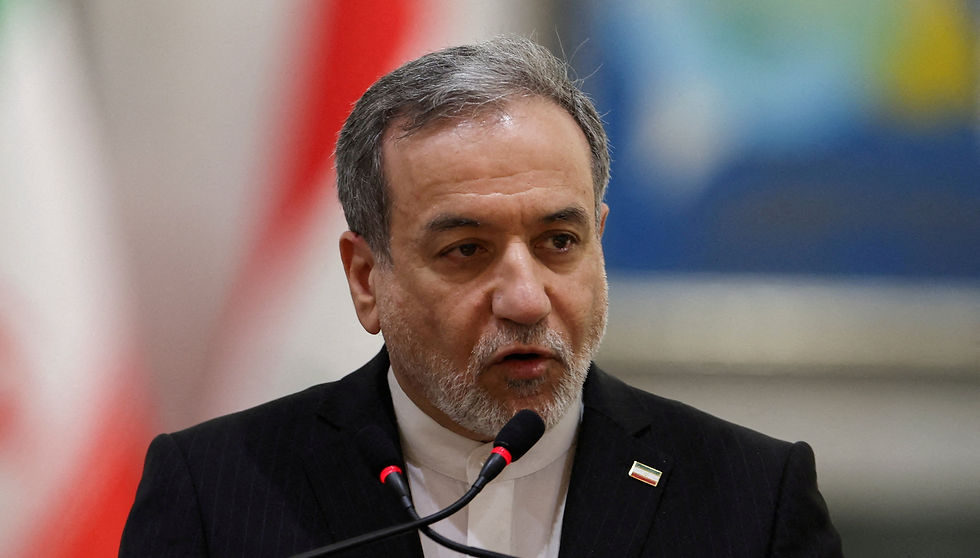
Iranian Foreign Minister Abbas Araqchi said Israeli attacks must stop immediately.
Privately, Israeli officials have been critical of the agreement. One senior official described it as “terrible for Israel,” saying the view is widely shared across the government.
While the latest agreement represents a major diplomatic breakthrough, significant questions remain over enforcement, regional security arrangements, and whether the ceasefire can hold beyond the initial extension period. -Reporting by Reuters bureausWriting by Andy Sullivan, Peter Graff and Jonathan Allen; Editing by Hugh Lawson, Sanjeev Miglani and Cynthia Osterman/Reuters
TOP POLITICAL STORIES

Ukraine's president says up to 50,000 North Korean troops could deploy to Russia
Iran says Oman deal nears final stage, urges US action to reopen Hormuz
_edited.jpg)
Pope Leo urges Russia and Ukraine to halt attacks on civilians
LATEST NEWS

52 PH schools being used as evacuation centers amid heavy rains – DepEd

Eight dead, over 230,000 affected by adverse weather in PH — OCD

Seven killed, 30 wounded in Houthi attack on Red Sea port of Mocha
Paraluman News Publication, Inc.
desk@myparaluman.ph
Tektite Towers (East), Exchange Road
Ortigas Center. San Antonio 1600
City of Pasig, NCR, Philippines
+63284298877
MENU
FOLLOW US
© 2026 Paraluman News Publication