Trump threatens new attacks as US-Iran peace talks open in Switzerland
U.S. President Donald Trump threatened renewed military action against Iran as Vice President JD Vance held the first talks under a fragile interim peace deal. The negotiations were overshadowed by Iran’s renewed closure of the Strait of Hormuz, raising concerns over global energy supplies and regional stability.
Humeyra Pamuk, Dave Graham and Tala Ramadan
June 22, 2026

FILE PHOTO: U.S. President Donald Trump speaks in the Oval Office as he signs the Secure America Act, at the White House in Washington, D.C., U.S., June 10, 2026.
Evan Vucci/File Photo/Reuters
BUERGENSTOCK, Switzerland/DUBAI — Donald Trump on Sunday threatened to resume military action against Iran even as Vice President JD Vance held talks with Iranian officials in Switzerland under a fragile interim peace framework aimed at stabilizing tensions between the two longtime adversaries.
The negotiations took place at the Swiss mountain resort of Buergenstock, owned through Qatari interests, marking the first formal engagement under a memorandum of understanding reached last week. The agreement sought to extend a ceasefire that began in April and create a 60-day window for broader diplomatic discussions. Hezbollah chief Naim Qassem said on Sunday that Israel will not stay in Lebanon, adding that the group would respond to any violation from the Israeli side.
His statements came as Israeli officials say that troops are free to act without restriction to eliminate threats in Lebanon despite an agreed ceasefire that took effect on Friday.
The deal outlines steps to reopen the Strait of Hormuz—a critical route for global energy shipments—and to halt hostilities across multiple regional fronts, including ongoing clashes in Lebanon involving Israel and Iran-backed forces.
However, Iran announced over the weekend that it had again suspended maritime traffic through the strait, citing continued fighting in Lebanon and accusing Washington of failing to uphold its commitments to enforce a ceasefire. Iranian officials also signaled that Sunday’s talks would remain limited to implementation issues rather than addressing deeper disputes such as Iran’s nuclear program.
In a social media post, Trump warned that Iran must rein in allied militant groups operating in Lebanon, referring to Hezbollah, and threatened severe retaliation if hostilities continue. He also suggested possible escalation over the closure of the strait.
U.S. media reports further indicated that Trump privately warned Iranian officials of severe consequences if the waterway remained shut, including potential U.S. control over the passage.
During the Swiss talks, U.S. and Iranian officials met with Qatari mediators present. Vice President Vance downplayed the impact of regional violence on diplomatic progress, saying efforts were underway to stabilize the situation in Lebanon.
“These things are always a little bit messy,” Vance said, while emphasizing that the administration had been instructed to pursue a renewed diplomatic approach toward Iran.
Iranian Foreign Minister Abbas Araqchi briefly interacted with mediators during the meeting but did not publicly engage with U.S. officials. No joint press appearance or photo opportunity was arranged.
A U.S. diplomat cited by Axios said the talks made progress on keeping the Strait of Hormuz open and on reinforcing the ceasefire framework in Lebanon, while also touching on broader nuclear-related concerns.
Iran defended its decision to restrict maritime traffic, linking the move to what it described as continued Israeli military activity in Lebanon and the lack of a fully enforced ceasefire. Iran’s Foreign Ministry said the discussions would focus narrowly on implementing the existing memorandum rather than expanding into new negotiations.
Iranian President Masoud Pezeshkian expressed cautious optimism that dialogue with the United States could eventually support economic recovery, including efforts to unlock frozen Iranian assets and secure sanctions relief.
Earlier, Iranian officials reiterated that the reopening of the strait was tied to conditions on the ground in Lebanon, where cross-border strikes and military operations have continued despite a recently announced ceasefire framework.
Lebanon has remained a key flashpoint throughout the conflict, with Israel continuing strikes against Hezbollah positions and Hezbollah forces firing in response. The militant group Hezbollah has been a central Iranian ally in the regional confrontation.
Reports from southern Lebanon suggested a temporary lull in violence on Sunday, with some displaced residents beginning to return home as traffic increased along major routes.
Lebanon has suffered extensive displacement since the escalation of hostilities, with more than a million people forced from their homes amid ongoing cross-border fighting.
The latest developments come as global markets closely monitor the Strait of Hormuz, which plays a critical role in oil shipments. Any prolonged disruption is expected to have immediate effects on energy prices and international supply chains.
Despite diplomatic efforts, both sides remain divided over enforcement of ceasefire terms, the status of regional proxy conflicts, and the future scope of negotiations under the current 60-day framework. -Reporting by Reuters bureaus; Writing by Peter Graff, Dave Graham, Jonathan Allen and Ann Saphir,Menna Alaa El-Din and Ahmed Tolba Editing by William Mallard, David Holmes, Sergio Non and Nia Williams, Alexandra Hudson/Reuters
TOP POLITICAL STORIES

Ukraine's president says up to 50,000 North Korean troops could deploy to Russia
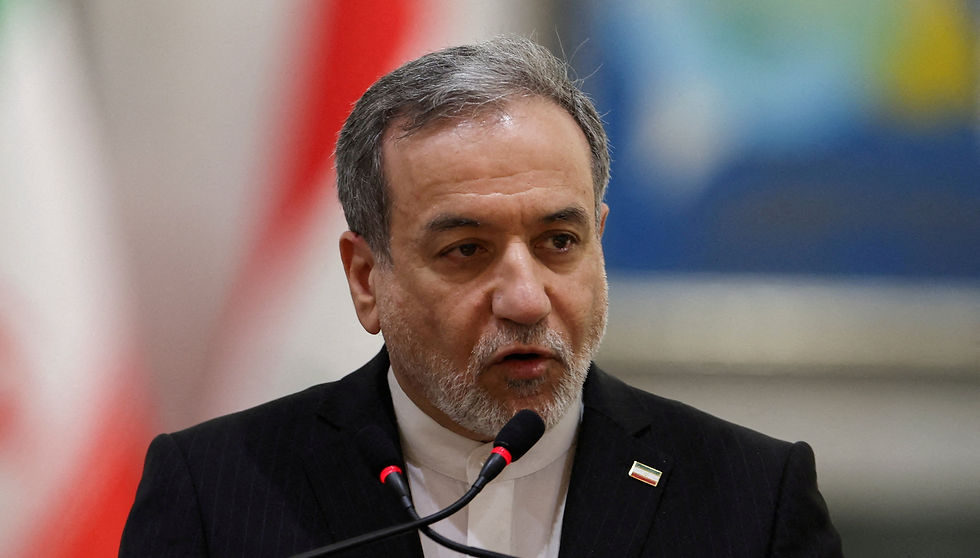
Iran says Oman deal nears final stage, urges US action to reopen Hormuz
_edited.jpg)
Pope Leo urges Russia and Ukraine to halt attacks on civilians
LATEST NEWS

Fire near Indonesia's Mount Bromo national park extinguished but new hotspots emerge

'Habagat' to bring heavy rains across Luzon and Western Visayas

Palace urges vigilance vs. leptospirosis amid prolonged rainfall and flooding
Paraluman News Publication, Inc.
desk@myparaluman.ph
Tektite Towers (East), Exchange Road
Ortigas Center. San Antonio 1600
City of Pasig, NCR, Philippines
+63284298877
MENU
FOLLOW US
© 2026 Paraluman News Publication