Philippine Senate dispute: a matter of law or of politics?
The views and opinions expressed in this article are solely those of the author and do not necessarily reflect the official policy or position of Paraluman News.
Atty. Nena Radoc
June 10,2026

The Mace of the Senate and the Philippine Flag
A screen grab of a photo on the official Facebook page of the Senate of the Philippines
Background of the Dispute
The current leadership dispute in the Philippine Senate has brought attention to a fundamental requirement of legislative procedure: the existence of a quorum.
While the question centers on which group legitimately controls the Senate, the legal controversy focuses on how many senators are required to constitute a quorum and validly conduct Senate business.
The Senate experienced a prolonged deadlock when the Cayetano group led by Senate President (SP) Alan Peter Cayetano refused to hold sessions on June 1 and 2, 2026.
Then, on June 3 the supposed last day to convene a session, a “political miracle” happened. Sen. Francis Escudero from the Cayetano bloc, attended the session, increasing the senators present to 12. The senators, claiming that they constituted a majority of 12 needed for quorum, proceeded to declare all seats vacant, including that of the SP’s, and elected new SP Pro Tempore, Sen. Sherwin Gatchalian.
The Gatchalian bloc elected the chairpersons of various committees, including the powerful Blue Ribbon Committee (BRC). From thereon, chaos and confusion followed, with Cayetano and Gatchalian both issuing separate directives and claiming leadership of the Senate.
At the heart of the controversy is whether the 12 senators present on June 3 constituted a valid quorum. If a quorum existed, then the Senate arguably possessed the authority to conduct business, reorganize committees, and elect officers. If no quorum existed, then all actions taken during the session may be vulnerable to constitutional challenge.
The Constitution
The starting point is Article VI, Section 16 of the 1987 Constitution, which provides: "A majority of each House shall constitute a quorum to do business."
The Constitution also separately provides that the Senate President shall be elected "by a majority vote of all its respective Members." Thus, the Constitution distinguishes between the number needed to elect a Senate President and the number needed merely to transact business.
Since the Senate is constitutionally composed of 24 members, it may be concluded that thirteen senators (50% +1) must always be present to constitute a quorum. This interpretation appears straightforward because 13 is the mathematical majority of 24.
The Avelino v. Cuenco Doctrine
Said Constitutional provisions were interpreted by the Supreme Court in the historical case of Avelino v. Cuenco (83 Phil. 17, 1949).
In that case, the Court distinguished between a majority to elect the SP and a majority to constitute quorum. The Court ruled that quorum should be determined based on the number of senators who were within the “coercive power of the Senate” to compel attendance. Since one senator was abroad and therefore outside the jurisdiction of the Senate at that time, the Court ruled that 12 senators constituted quorum because 12 was a majority of 23.
Applying the Avelino case to the current case, the Gatchalian bloc claim that both Senators Ronald dela Rosa (a fugitive from justice) and Jinggoy Estrada (under incarceration for non-bailable crimes) are effectively outside the coercive power of the Senate.
Hence, the basis of the quorum should only be 22, where majority is 12. They also maintain that the Senate has followed this practice in previous instances, and nobody questioned the quorum at that time. The Cayetano group argue that the Constitution's plain language requires 13 members because the Senate is constitutionally composed of 24 senators.
The Numbers Game
The current controversy boils down to the number needed for quorum and election of Senate officers.
• Determination of Quorum – Avelino v. Cuenco decision remains the prevailing interpretation, hence, 12 of 22 satisfies the quorum needed to do business.
• Election of the Senate President – there appears to be no controversy here, as both factions agree that 13 votes are needed to elect a new SP. The basis is the Article VI, Section 16(1) of the 1987 Constitution which provides:
"The Senate shall elect its President and the House of Representatives, its Speaker, by a majority vote of all its respective Members."
Hence, what the Gatchalian bloc did was just to declare the SP position “vacant” and elect a new SP Pro Tempore, not the SP.
• Election of SP- here, the two blocs differ in their positions. The Constitution does not mention SP Pro Tempore, as it merely says: “Each House shall choose such other officers as it may deem necessary”( Sec 16 (2) Article VI).
But Senate House Rule I, Section 1 provides that the Senate shall elect a President Pro Tempore, a Secretary, and a Sergeant-at-Arms. Also, House Rule II Section 2 provides : "The officers of the Senate shall be elected by the majority vote of all its Members."
This House Rule provides the strongest argument that election of SP Pro Tempore by mere 12 senators was not valid.
• Election of Committee Chairpersons and members- Again, the Constitution is silent on this point, but the Senate House Rule X, Section 18 provides: "The membership of the permanent committees, including their respective Chairpersons, shall be chosen by the Senate." This Rule did not specify “majority of “all its members”.
The present power struggle highlights the distinction between a majority required merely to conduct a regular business, and a majority required to elect SP Pro Tempore and other officers.
Since the Senate acts enjoy a presumption of regularity, they remain valid until declared otherwise by the Supreme Court.
Will the Supreme Court intervene?
Historically, disputes involving the internal organization of Congress are often treated with judicial restraint because each House possesses constitutional authority to determine its own rules of proceedings. It appears here that the dispute centers mainly on the interpretation of the Senate House Rules, which the SC may not be inclined to interfere with.
Moreover, the Executive Department and the House seem to have acknowledged that the Gatchalian bloc is now the de-facto, if not de-jure, majority. This “political” recognition is again, something, that the SC will generally not want to disturb.
TOP POLITICAL STORIES

Ukraine's president says up to 50,000 North Korean troops could deploy to Russia
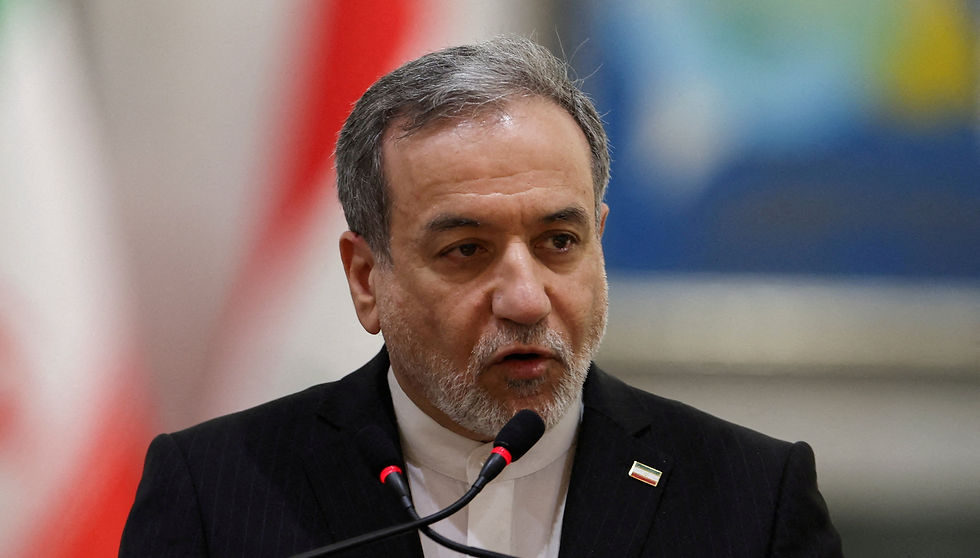
Iran says Oman deal nears final stage, urges US action to reopen Hormuz
_edited.jpg)
Pope Leo urges Russia and Ukraine to halt attacks on civilians
LATEST NEWS

OCD verifying 12 deaths linked to Luis, Maymay and 'Habagat'

52 PH schools being used as evacuation centers amid heavy rains – DepEd

Eight dead, over 230,000 affected by adverse weather in PH — OCD
Paraluman News Publication, Inc.
desk@myparaluman.ph
Tektite Towers (East), Exchange Road
Ortigas Center. San Antonio 1600
City of Pasig, NCR, Philippines
+63284298877
MENU
FOLLOW US
© 2026 Paraluman News Publication