ANALYSIS: Trump veers toward exit in Iran war but risks loom
U.S. President Donald Trump has approved a framework agreement with Iran aimed at easing tensions and stabilizing global energy markets, but the deal stops short of key U.S. objectives and faces criticism for significant concessions to Tehran. While it marks a major diplomatic breakthrough, analysts warn it could still leave Iran with strategic leverage and unresolved nuclear risks.
REUTERS
June 15, 2026

FILE PHOTO: U.S. President Donald Trump speaks as he meets with German Chancellor Friedrich Merz (not pictured) in the Oval Office at the White House in Washington, D.C., U.S., March 3, 2026.
Jonathan Ernst/File Photo/Reuters
WASHINGTON - With a framework agreement for a peace deal with Iran, U.S. President Donald Trump may have found a path to begin extricating himself from an unpopular war, while also setting global markets on course for easing energy prices that have surged during the crisis.
However, the deal falls short of many of the objectives Trump outlined in the early days of the conflict, potentially exposing him to criticism from hawks within his own party and leaving the United States in a strategically weaker position than before the war began.
More than three months after launching strikes on the Islamic Republic, Trump on Sunday approved a “memorandum of understanding” that marks the most significant breakthrough in peace talks so far. The agreement reportedly includes Iran’s commitment to reopen the Strait of Hormuz, a move that could help ease elevated U.S. gasoline prices.
At the same time, the Pakistan-mediated deal—whose full text has not been released—appears to include significant U.S. concessions, including postponing discussions on dismantling Iran’s nuclear program, which had been one of Trump’s central war objectives.
Trump’s push for an exit has intensified amid growing domestic pressure to end a conflict that has killed thousands, strained the U.S. economy, and dragged down his approval ratings just months ahead of the November midterm elections. His Republican Party is also fighting to maintain control of Congress.
In the days leading up to Sunday’s announcement, the effort faced pushback from Iran hawks in Washington, who warned against making concessions to Tehran.
“The deal with the Islamic Republic of Iran is now complete. Congratulations to all!” Trump said in a social media post on his 80th birthday. Iran later confirmed the agreement, which is expected to be signed on Friday, though many critical details remain unresolved.
The two sides have offered differing interpretations of the framework, which is intended to extend the current ceasefire for 60 days to allow further negotiations aimed at ending a war that has triggered a global energy shock.
Analysts warn that while the United States may claim diplomatic progress, Iran—though weakened militarily and economically—could emerge with greater leverage.
Although U.S. and Israeli strikes have significantly degraded Iran’s military capabilities, Tehran has demonstrated it can withstand sustained pressure while still threatening a significant share of global oil and gas flows.
The White House did not immediately respond to requests for comment.
SOME TRUMP OBJECTIVES UNMET
Trump, who campaigned on a promise to avoid foreign wars and focus on domestic economic concerns, has framed the framework as a major U.S. victory, even as Iran has made similar claims.
Still, many analysts say Trump—who previously demanded Iran’s “unconditional surrender”—has fallen short of several core objectives.
Iran’s government remains intact, despite early calls from Trump urging political change in Tehran. Leadership transitions following wartime losses have also produced more hardline figures.
Other unmet demands include dismantling Iran’s ballistic missile program and ending support for regional proxy groups, including Hezbollah in Lebanon. A U.S. official, however, said the preliminary deal still achieves Trump’s core goals.
The memorandum also leaves unresolved the fate of Iran’s near-weapons-grade uranium stockpile. Trump said in a social media post that the United States would retrieve the material for “downblending and destruction,” though no timeline was provided. An Iranian official said Tehran would “dilute” the stockpile independently, without a defined verification mechanism.
“This deal is likely the best possible outcome to avert further conflict, but it is no better than what could have been achieved through diplomacy rather than war,” said Victoria Taylor, a former U.S. State Department official now at the Atlantic Council.
It also remains unclear whether the final agreement will improve upon the 2015 nuclear accord reached under former President Barack Obama, which Trump later withdrew from in 2018.
U.S. officials say any easing of sanctions or unfreezing of Iranian assets will be gradual and tied to compliance. Iran, however, has signaled expectations of immediate financial relief.
By moving in this direction, Trump risks renewed criticism that he is providing Tehran with economic lifelines—criticism he previously directed at Obama.
IRAN THREAT TO PERSIST
Trump and his advisers have highlighted what they describe as Iran’s commitment never to pursue a nuclear weapon. However, Tehran has long maintained that its position is grounded in a religious decree issued by former Supreme Leader Ayatollah Ali Khamenei.
Under the framework, Iran would lift restrictions on shipping through the Strait of Hormuz, while the United States would remove its naval blockade of Iranian ports. However, Tehran insists it must retain a role in managing the strategic waterway.
Experts note that reopening the strait would largely restore prewar conditions rather than represent a structural shift.
“Iran has demonstrated that even in a weakened state, it can still disrupt the Strait of Hormuz at will,” said Jon Alterman of the Center for Strategic and International Studies.
The war has killed thousands, mostly in Iran and Lebanon, where fighting between Israel and Iran-aligned militants has intensified. The conflict has also claimed the lives of 13 U.S. service members.
U.S. military spending has reached tens of billions of dollars, while ammunition stockpiles have been significantly reduced. The war has also strained relations with European allies, who were not consulted before the conflict began.
Tensions have also emerged with Israeli Prime Minister Benjamin Netanyahu, who has maintained a close wartime partnership with Trump but has said Israel will not be part of the memorandum. The two leaders reportedly clashed over Israel’s continued military operations in Lebanon.
Washington’s Gulf allies, many of whom have faced Iranian missile and drone attacks, have welcomed the prospect of a settlement but remain wary of a weakened Iran still capable of regional retaliation. -Reporting By Matt Spetalnick and Humeyra Pamuk; Writing by Matt Spetalnick; Editing by Don Durfee and Stephen Coates/Reuters
TOP POLITICAL STORIES

Ukraine's president says up to 50,000 North Korean troops could deploy to Russia
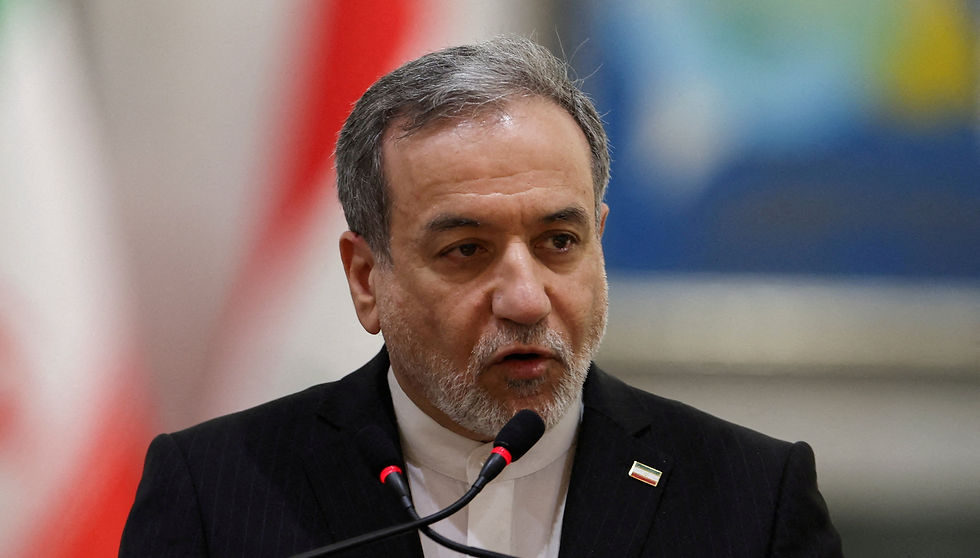
Iran says Oman deal nears final stage, urges US action to reopen Hormuz
_edited.jpg)
Pope Leo urges Russia and Ukraine to halt attacks on civilians
LATEST NEWS

Eight dead, over 230,000 affected by adverse weather in PH — OCD

Seven killed, 30 wounded in Houthi attack on Red Sea port of Mocha

Fire near Indonesia's Mount Bromo national park extinguished but new hotspots emerge
Paraluman News Publication, Inc.
desk@myparaluman.ph
Tektite Towers (East), Exchange Road
Ortigas Center. San Antonio 1600
City of Pasig, NCR, Philippines
+63284298877
MENU
FOLLOW US
© 2026 Paraluman News Publication