ANALYSIS: Rebeca Grynspan and the case for a more humane, multilingual UN
In a humanitarian emergency, leadership reveals itself quickly. There is no time for performance. People are exhausted, frightened, grieving, and in urgent need of practical help. Staff are trying to turn mandates into action under impossible pressure. In those moments, what matters is not only what a leader says, but how she listens.
Atty. Anna Mae Yu Lamentillo
June 10, 2026

Candidate for UN Secretary General Rebeca Grynspan
A screen grab of a photo on the official Facebook page of Rebeca Grynspan
When people speak about the next United Nations Secretary-General, they often reach first for the language of power: Security Council calculations, regional rotation, diplomatic acceptability, and institutional reform. Those things matter. But when I think about Rebeca Grynspan, I begin somewhere else: in the aftermath of Typhoon Haiyan, when I was a young, relatively new member of UN staff and had the chance to work with her.
In a humanitarian emergency, leadership reveals itself quickly. There is no time for performance. People are exhausted, frightened, grieving, and in urgent need of practical help. Staff are trying to turn mandates into action under impossible pressure. In those moments, what matters is not only what a leader says, but how she listens.
That is what I remember about Grynspan. She carried authority without arrogance. She understood that the field is not a stage for global officials to appear compassionate. It is where the United Nations is tested. It is where promises become water, shelter, medical care, protection, coordination — or fail to become anything at all.
That experience shaped my belief that Grynspan should become the next UN Secretary-General. Her formal credentials are strong: she is a former Vice President of Costa Rica, an economist, and the current Secretary-General of UN Trade and Development, where she became the first woman to lead the organization. Costa Rica has also nominated her for the UN’s top post. But my support for her is not simply about biography. It is about temperament, values, and the kind of United Nations the world now needs.
The UN is often criticized for being too distant from ordinary people: too bureaucratic, too slow, too fluent in acronyms and too hesitant in action. Some of that criticism is unfair; much of it is not. The institution must become more human, not just more efficient. It must be able to hear people before it claims to represent them.
That is why multilingualism matters. A multilingual UN is not merely an organization that translates polished speeches into its official languages. It is an organization that understands language as dignity, access and power. It is an organization that asks whether a mother can understand a cyclone warning, whether a displaced family can claim assistance, whether an Indigenous elder can speak without being reduced to a footnote in someone else’s report.
The world is losing languages at a devastating pace. UNESCO has warned that 40 percent of the estimated 6,700 languages spoken globally are in danger of disappearing, and most of those at risk are Indigenous languages. The UN General Assembly has proclaimed 2022–2032 the International Decade of Indigenous Languages. But a decade cannot be allowed to become only a slogan. It must become a mandate for action.
A Grynspan-led UN could make the preservation of endangered languages central to development, education, climate adaptation, humanitarian response and digital inclusion. It could support community-led archives, mother-tongue education, local interpreters, Indigenous media, and emergency communications in the languages people actually use. It could treat linguistic survival not as a cultural luxury, but as a human rights issue.
This matters because when a language disappears, the world loses more than words. It loses memory, ecological knowledge, oral history, humor, prayer, law, and ways of belonging. For communities already facing displacement, climate change and marginalization, language can be the last shelter of identity.
Typhoon Haiyan taught me that the UN’s credibility is built in human encounters: the meeting where local knowledge is taken seriously, the message that reaches people in time, the leader who remembers that junior staff and affected communities both deserve respect. I saw in Rebeca Grynspan a leader capable of that kind of attention.
The next Secretary-General should not only speak for the world. She should listen to it — in all its languages. Rebeca Grynspan could help build that UN.
TOP POLITICAL STORIES

Ukraine's president says up to 50,000 North Korean troops could deploy to Russia
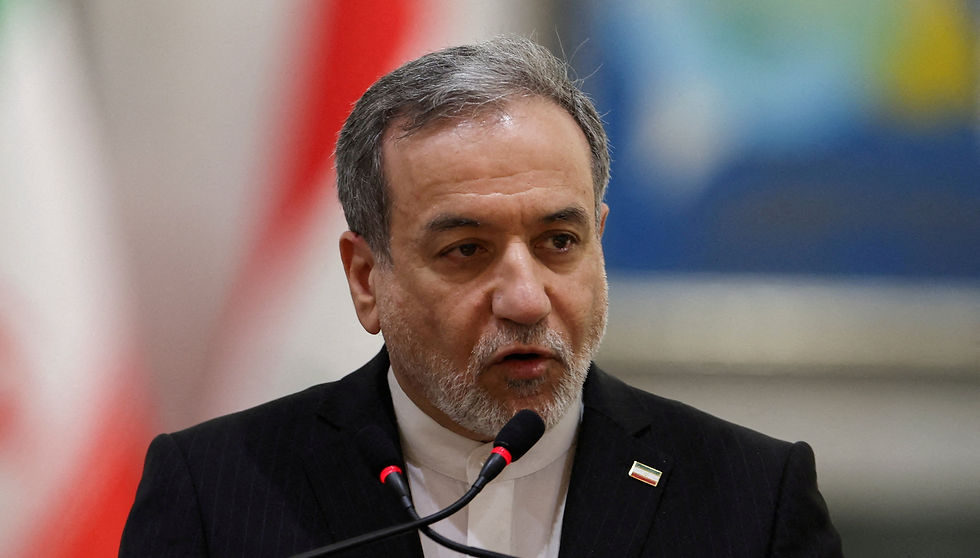
Iran says Oman deal nears final stage, urges US action to reopen Hormuz
_edited.jpg)
Pope Leo urges Russia and Ukraine to halt attacks on civilians
LATEST NEWS

OCD verifying 12 deaths linked to Luis, Maymay and 'Habagat'

52 PH schools being used as evacuation centers amid heavy rains – DepEd

Eight dead, over 230,000 affected by adverse weather in PH — OCD
Paraluman News Publication, Inc.
desk@myparaluman.ph
Tektite Towers (East), Exchange Road
Ortigas Center. San Antonio 1600
City of Pasig, NCR, Philippines
+63284298877
MENU
FOLLOW US
© 2026 Paraluman News Publication