ANALYSIS: Netanyahu and Trump on collision course as US, Iran agree to halt war
Benjamin Netanyahu is increasingly at odds with Donald Trump over a U.S.-Iran ceasefire and negotiations that Israel fears will limit its military freedom of action against Hezbollah and Iran-backed threats. The emerging rift highlights diverging strategic goals as Washington pushes a broader deal while Israeli officials privately warn it undermines their security interests.
Rami Ayyub and Maayan Lubell / Reuters
June 16, 2026

Israeli Prime Minister Benjamin Netanyahu holds a news conference, following a U.S.-Iran deal, in Jerusalem, June 15, 2026.
Ronen Zvulun/Pool/Reuters
JERUSALEM — Israeli Prime Minister Benjamin Netanyahu is facing growing tension with U.S. President Donald Trump over a U.S.-brokered diplomatic push involving Iran, even as Israel continues military operations tied to Hezbollah in Lebanon.
Netanyahu had reportedly positioned Israel’s role in a joint U.S.-Israeli pressure campaign against Iran as both a strategic and political advantage ahead of domestic elections. However, the evolving negotiations between Washington and Tehran have instead created friction between the two leaders, with differing priorities over how quickly hostilities should be reduced and what conditions should follow.
While Israeli officials have been cautious in public statements to avoid straining relations with Washington, private frustration appears to be mounting. One senior Israeli official described a preliminary agreement as “terrible for Israel,” adding that no senior figure in Israel’s leadership sees it favorably.
The United States has said the proposed arrangement would include a 60-day ceasefire period during which broader negotiations would take place, including discussions on Iran’s nuclear program. Washington has indicated that the goal is to address both U.S. and Israeli security concerns over time through a longer diplomatic process.
Israeli officials, however, believe the timeline may stretch beyond the initial period, potentially limiting Israel’s ability to take independent military action while key security issues remain unresolved. Concerns in Jerusalem have focused particularly on Iran’s nuclear ambitions and Tehran’s regional influence through allied armed groups.
Tensions between Netanyahu and Trump have also reportedly intensified over Israel’s operations against Hezbollah in Lebanon. Trump has urged restraint at various points, including during a reportedly heated phone call earlier this month in which he strongly opposed a planned Israeli strike on Beirut while negotiations were underway.
According to reports, Trump described Netanyahu during that call in highly critical terms and ordered him not to proceed with the strike. Although Israel initially held back, it later carried out an attack on Beirut’s southern suburbs a week afterward, prompting retaliatory rocket fire from Lebanon and drawing public criticism from Trump toward both sides.
Hours before the U.S. and Iran announced an interim understanding, Israel again struck targets in the Lebanese capital following rocket fire from Lebanese territory. Trump dismissed the attacks as limited in scale, calling them “small and meaningless.”
Netanyahu, meanwhile, has defended Israel’s actions and insisted the country remains secure. Speaking at a press conference in Jerusalem, he acknowledged occasional differences with Trump but emphasized Israel’s independent security decision-making.
“The president of the United States is the president of the United States, and I am the prime minister of Israel,” Netanyahu said. “We often see eye to eye, and sometimes we don’t. I am responsible for Israel’s security interests.”
Despite diplomatic efforts, Israeli officials say Israel was caught off guard when Trump signaled that a deal with Iran was nearing completion. Several officials admitted Israel has had limited success influencing the direction of the talks.
Washington’s proposed framework reportedly includes a pause in hostilities and a negotiation period aimed at a broader agreement. However, key issues that Israel has consistently highlighted—such as Iran’s missile program and support for regional militant groups—are not expected to be central in the immediate phase of negotiations.
Some Israeli officials believe the 60-day period could be extended to 90 days, with continued U.S. military presence in the region intended to support the diplomatic process. Israel, however, fears such an extension could further restrict its operational flexibility.
At the same time, Netanyahu has insisted that Israel will maintain a security presence in southern Lebanon and retain what he described as “freedom of action” against Hezbollah threats.
“Iran wanted us to withdraw, but I stood firm,” he said. “We are keeping our security zone to protect Israel’s northern citizens.”
Analysts say the emerging disagreement highlights a rare divergence in U.S.-Israeli strategic priorities. Dan Shapiro, a former U.S. ambassador to Israel, said the situation reflects a significant shift in alignment between the two allies.
“This is a pretty stark moment of divergence of interests,” Shapiro said. He added that Netanyahu is unlikely to openly oppose the agreement but may signal that Israel is not fully bound by it.
Within Israel, political calculations are also shaping Netanyahu’s response. Facing elections expected later this year, the prime minister has long portrayed himself as uniquely capable of managing relations with Trump, particularly after close cooperation during Trump’s first term.
That period saw major U.S. policy shifts favorable to Israel, including the relocation of the U.S. embassy to Jerusalem and support for the Abraham Accords, which normalized relations between Israel and several Arab states. Trump also withdrew from a nuclear agreement with Iran negotiated under former President Barack Obama, a move welcomed by Netanyahu at the time.
However, analysts say the current diplomatic track undermines Netanyahu’s political narrative. Jonathan Rynhold of Bar-Ilan University said Netanyahu may struggle to convince the Israeli public that his close relationship with Trump guarantees strategic advantage.
“He will be unable to sell this agreement to the Israeli public,” Rynhold said. “The best he can hope for is that negotiations fail and the conflict resumes in Israel’s favor after 60 days.”
Public opinion data appears to reflect growing skepticism. A recent Israel Democracy Institute poll found that only 41% of Jewish Israelis believe their security is a central concern for Trump, a significant decline from earlier in the year.
Despite this, Israeli Energy Minister Eli Cohen said Israel would act independently if necessary, particularly if Iran attempts to rebuild its nuclear or missile capabilities.
“If Iran tries to renew its nuclear and ballistic missile programs, we will act,” Cohen said in remarks to Israeli public broadcaster Kan.
As negotiations continue, both sides appear committed to their positions, even as diplomatic efforts aim to prevent further escalation in an already volatile regional conflict. -Reporting by Rami Ayyub, Maayan Lubell and Benjamin RaabEditing by Peter Graff/Reuters
TOP POLITICAL STORIES

Ukraine's president says up to 50,000 North Korean troops could deploy to Russia
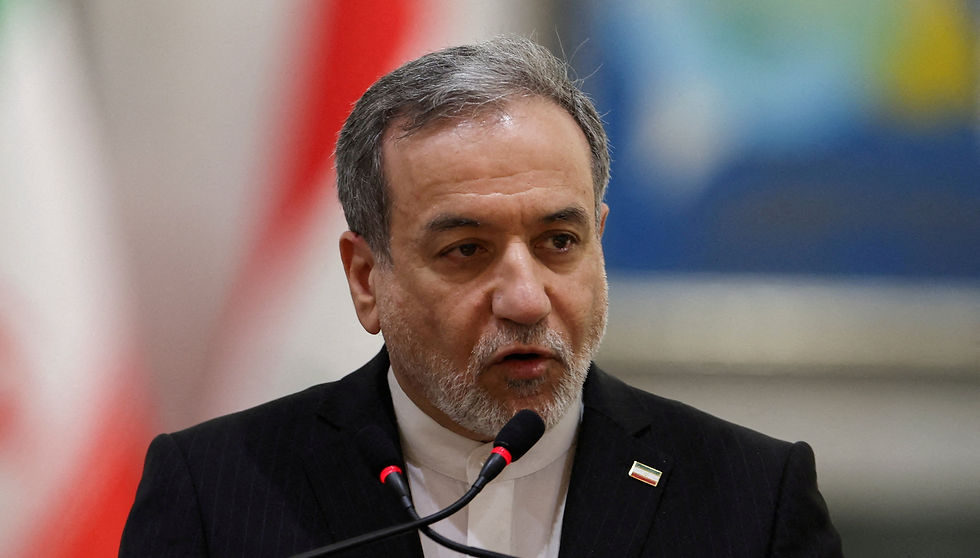
Iran says Oman deal nears final stage, urges US action to reopen Hormuz
_edited.jpg)
Pope Leo urges Russia and Ukraine to halt attacks on civilians
LATEST NEWS

Eight dead, over 230,000 affected by adverse weather in PH — OCD

Seven killed, 30 wounded in Houthi attack on Red Sea port of Mocha

Fire near Indonesia's Mount Bromo national park extinguished but new hotspots emerge
Paraluman News Publication, Inc.
desk@myparaluman.ph
Tektite Towers (East), Exchange Road
Ortigas Center. San Antonio 1600
City of Pasig, NCR, Philippines
+63284298877
MENU
FOLLOW US
© 2026 Paraluman News Publication